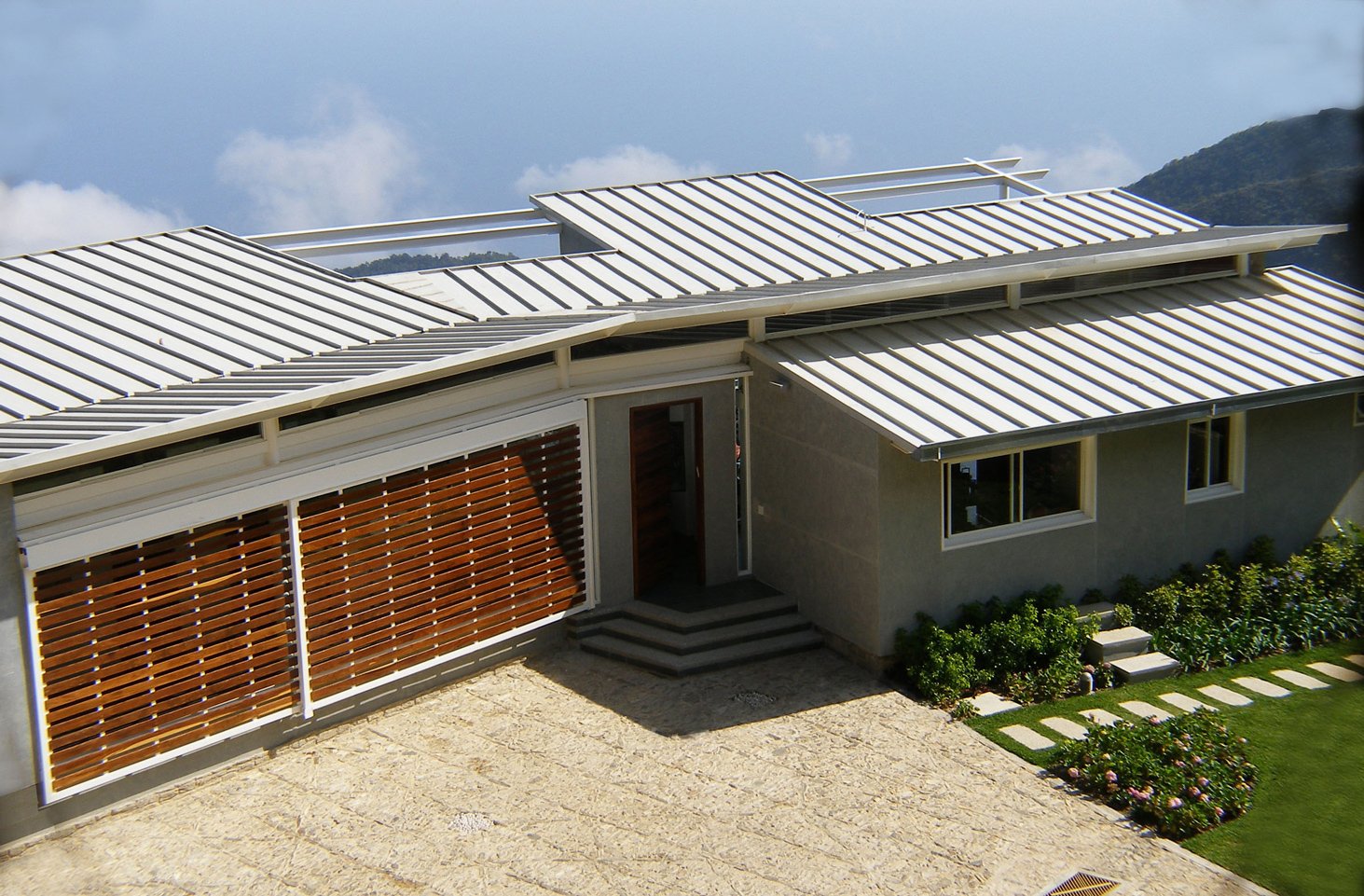
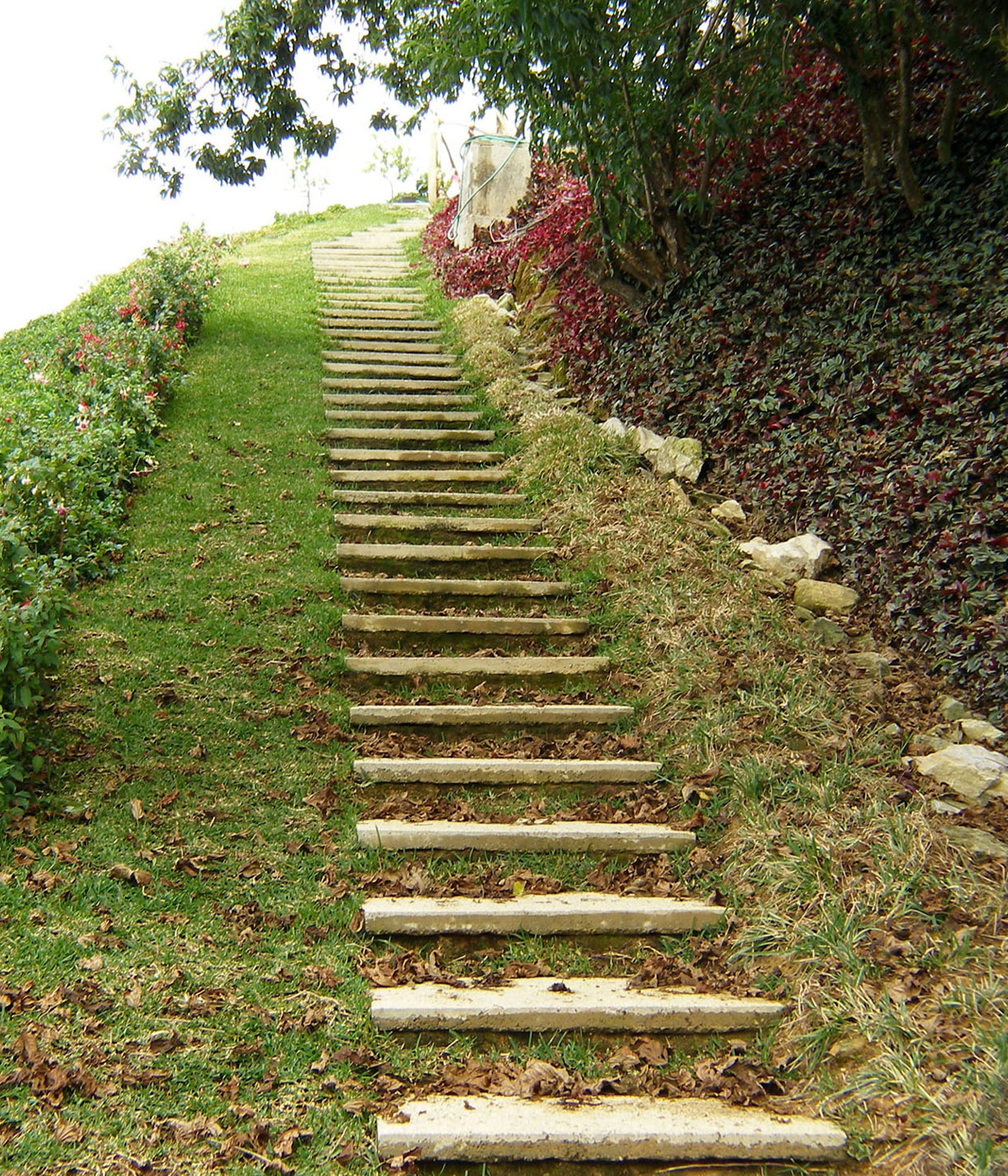
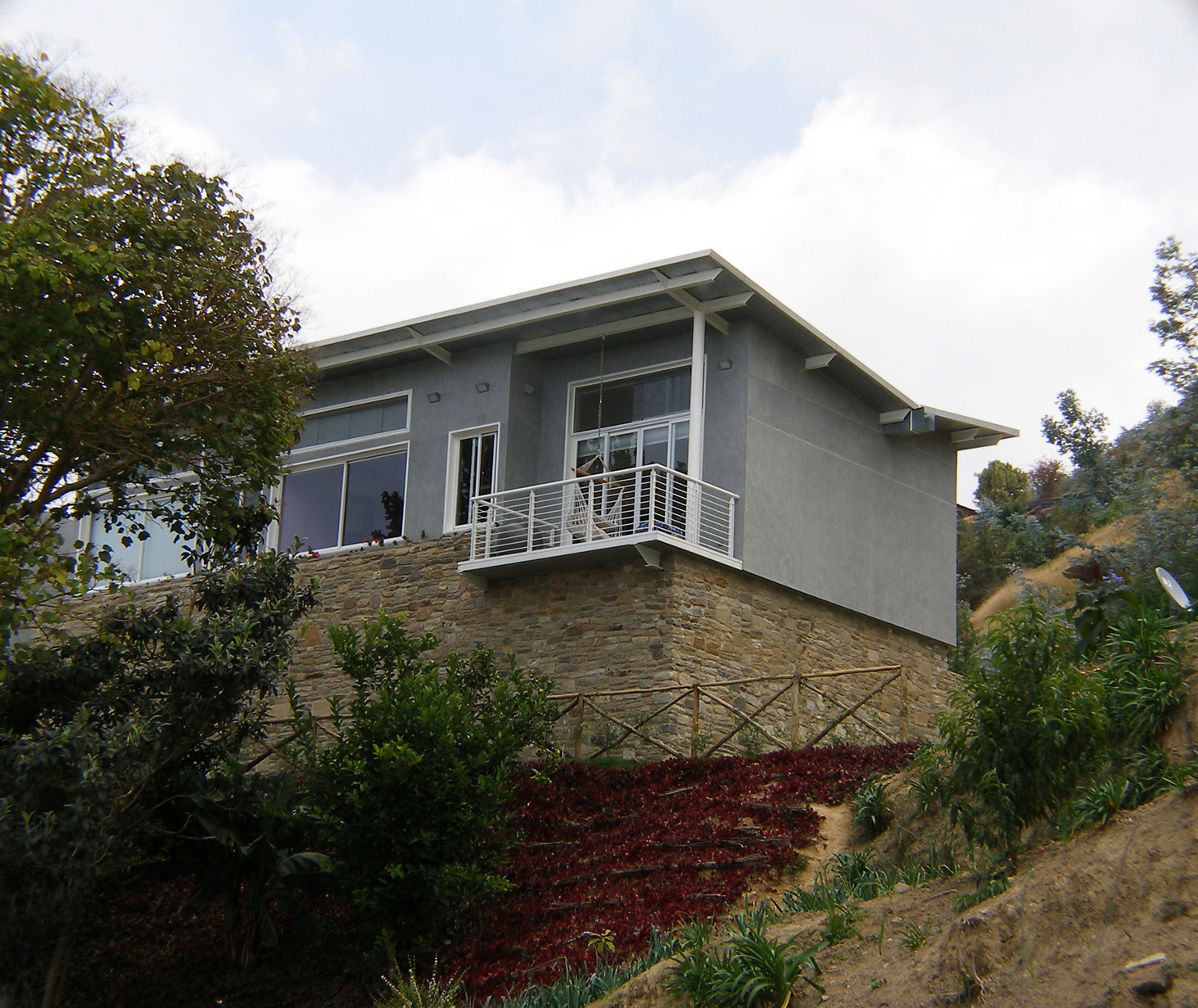
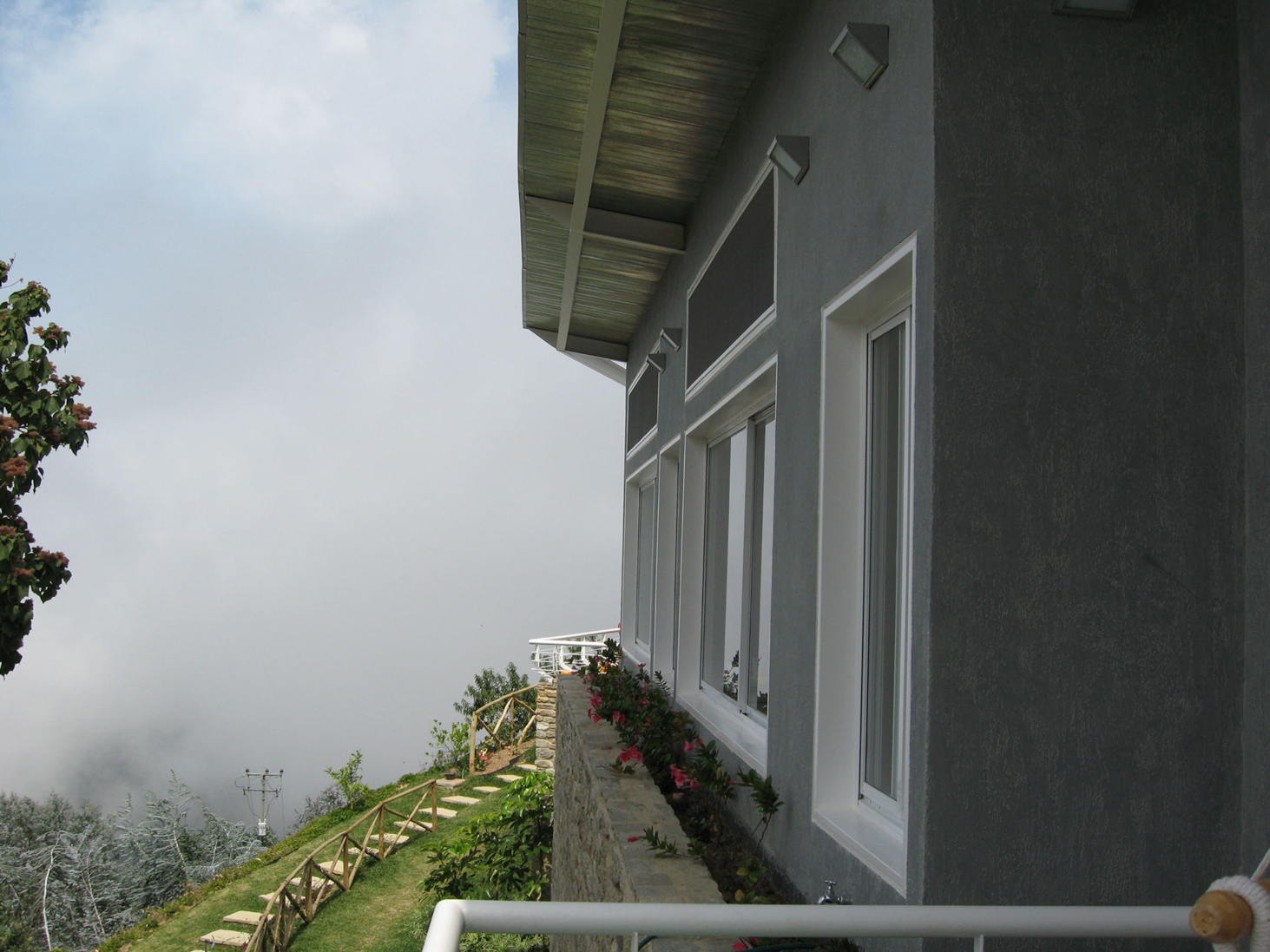
The design takes its cue from Glenn Murcutt’s principle to “touch this earth lightly.” On a 90,000-square-foot site, the house claims just 1,722 square feet, 1,600 of them livable. The footprint is kept small on purpose, as much an ethical choice as a practical one. Rather than cutting the mountain to fit a program, the building settles onto the slope and lets the terrain remain the dominant presence.
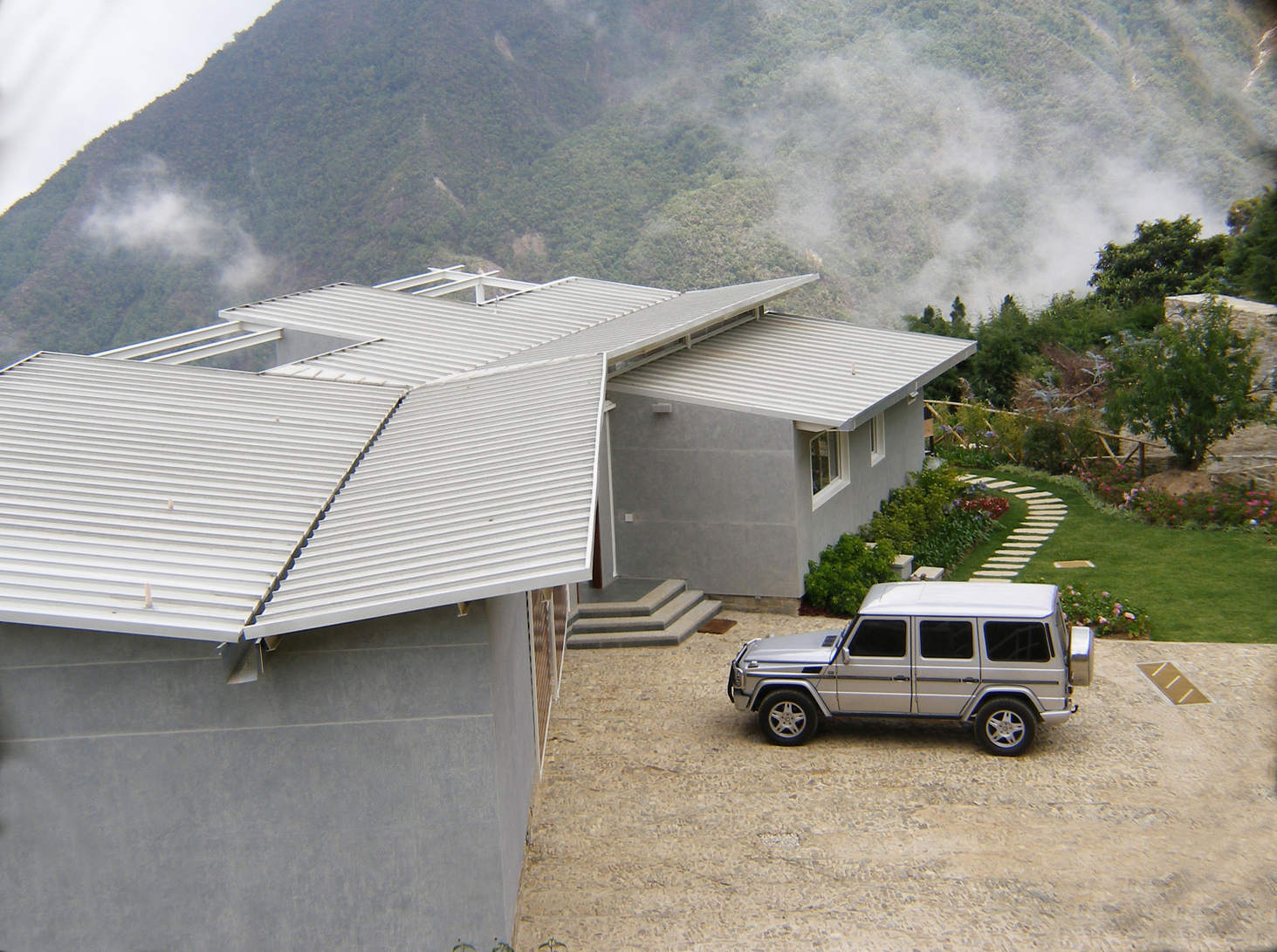
Fog defines the place, and the house answers it directly. The roof is finished in a tone drawn from the mist itself and from the shifting colors of the surrounding ridgelines, so on grey days the volume seems to dissolve into its setting. From below, it barely registers against the mountain. From within the cloud line, it appears to hover above it. On clear days, the veil lifts and the views open across the range.
The roof does more than disappear. Its inverted form echoes the profile of the surrounding peaks, a folded line that reads as landscape rather than shelter. The same geometry works as a collection surface, channeling rainwater into large storage tanks that supply the home. In a remote mountain setting, the gesture that shapes the silhouette also sustains daily life.
Below the roofline, the walls hold two languages in tension. Indigenous stone is laid in an irregular, organic pattern, each piece set according to its own shape. Against it, the building envelope runs in clean, unbroken straight lines. The contrast gives the house its character: the stone roots it to the mountain, while the geometry marks it clearly as a made thing.
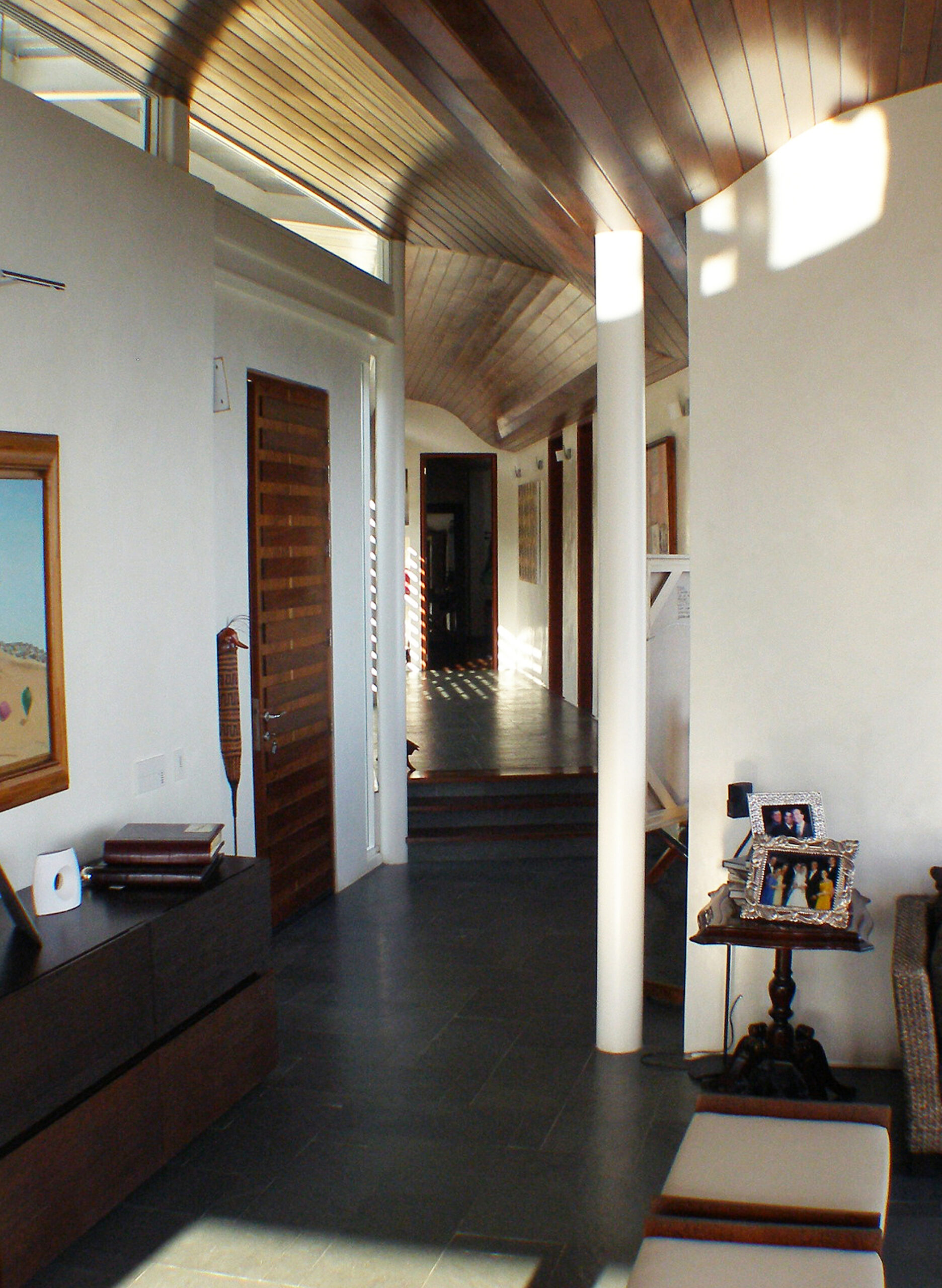
Inside, the defining gesture is overhead. A curved wood ceiling moves across the main space in one continuous sweep. It brings warmth and rhythm to an otherwise restrained interior and recalls, in softer form, the undulating landscape beyond the walls.
The clients asked for a paradise within a paradise, built with materials the surrounding land could provide. What they received is an early statement of ideas that still run through SDH Studio’s work: a building shaped by its site, honest about its materials, and quiet enough to let the mountain speak first.