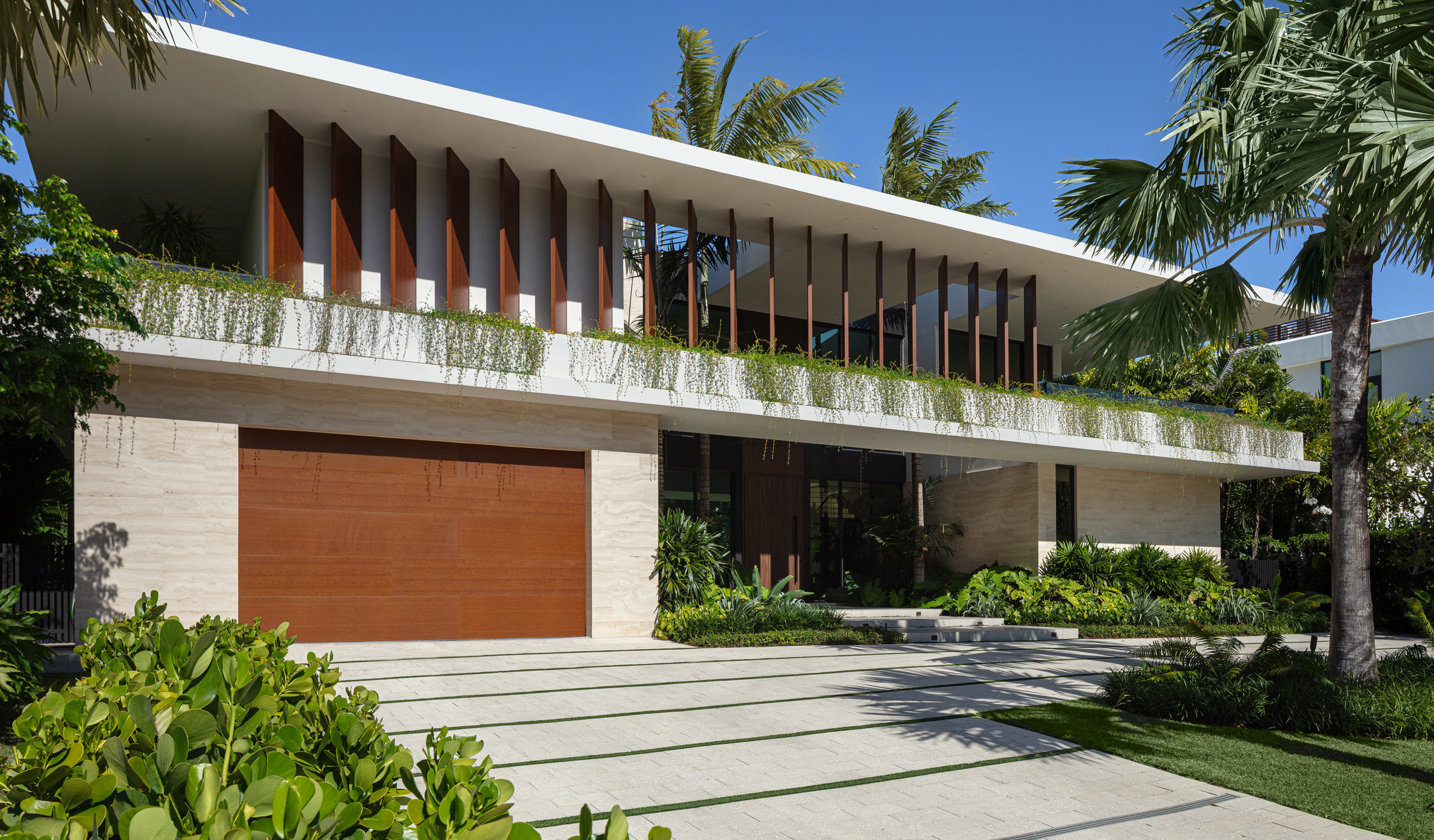
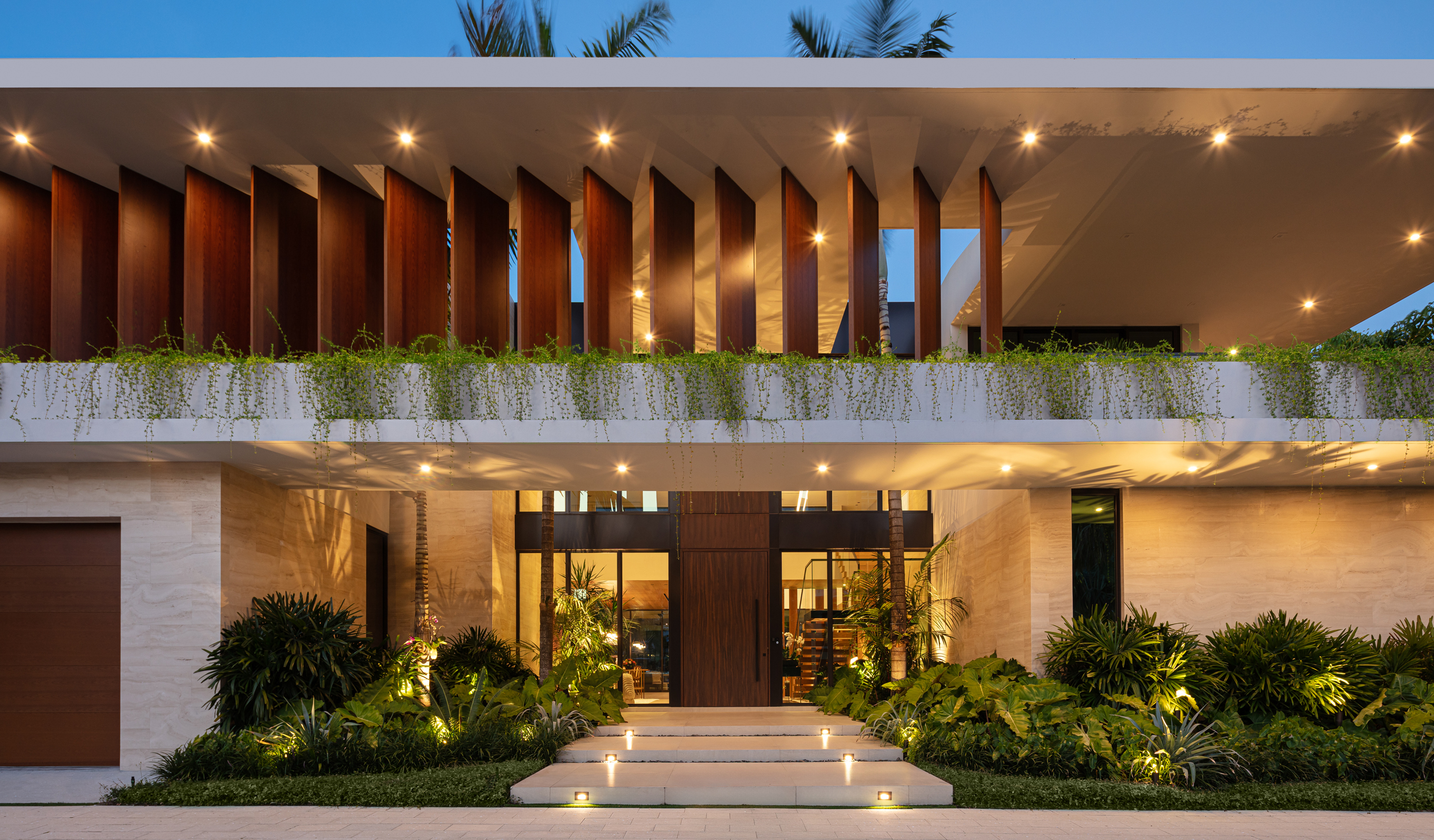
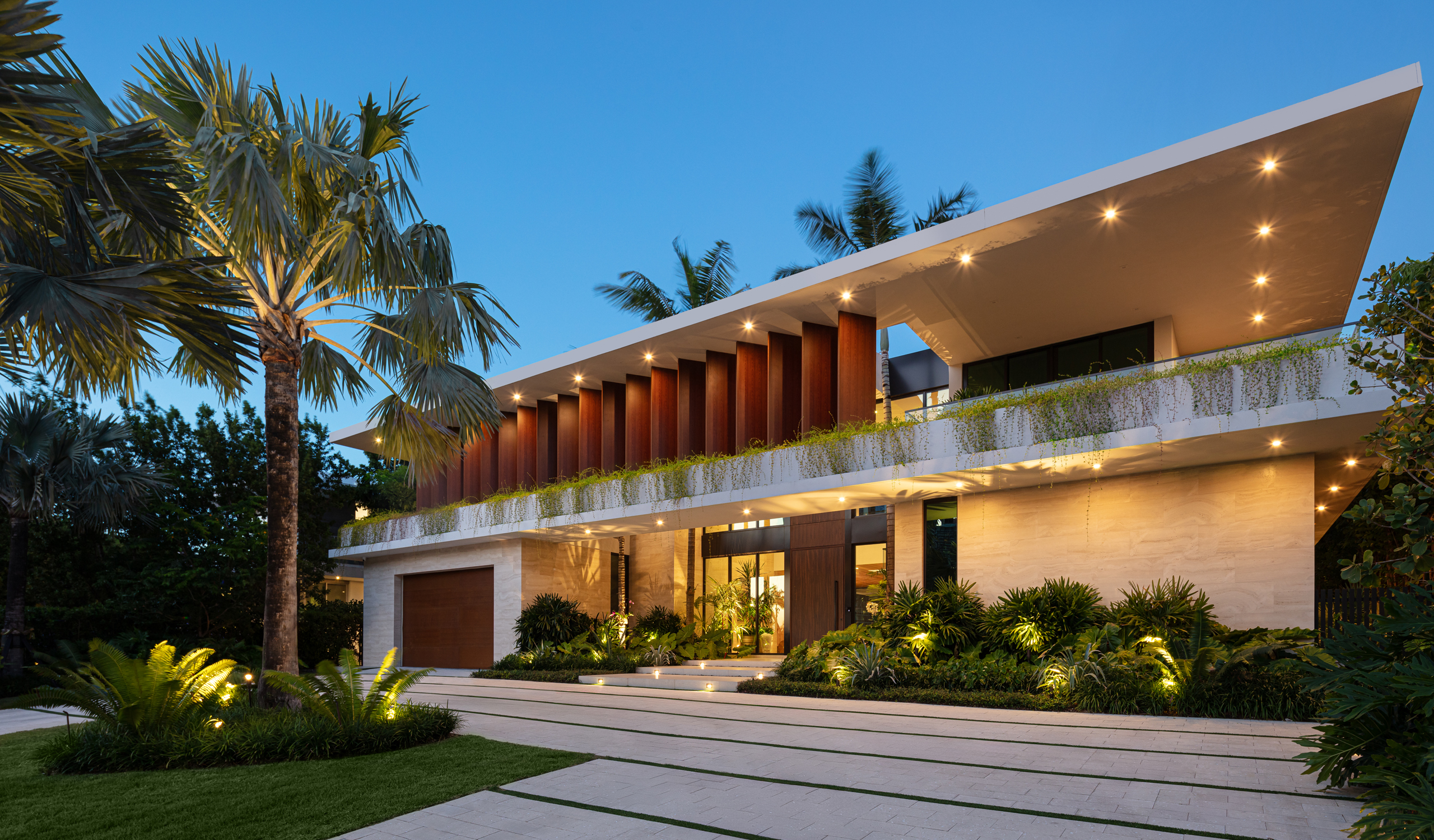
The street elevation is organized as two stone volumes, clad in pale stone laid in long horizontal courses, with the entrance recessed deep between them. Shallow steps, marked by low lights at each tread, rise to a tall timber door set within a dark-framed surround. Above, a rhythm of warm-toned vertical louvers runs across two-thirds of the upper facade, admitting light while screening the rooms behind. A thin white roof plane cantilevers well beyond the walls, its soffit studded with downlights that turn the house into a lantern at dusk.
Between the two levels, a continuous planter wraps the entire house. Trailing greenery spills over its edge and softens the line where stone meets louver, so the upper story appears to rest on a hedge. This is the project’s defining gesture: a garden that belongs to the architecture itself, read from the street, from the pool, and from the rooms it borders.
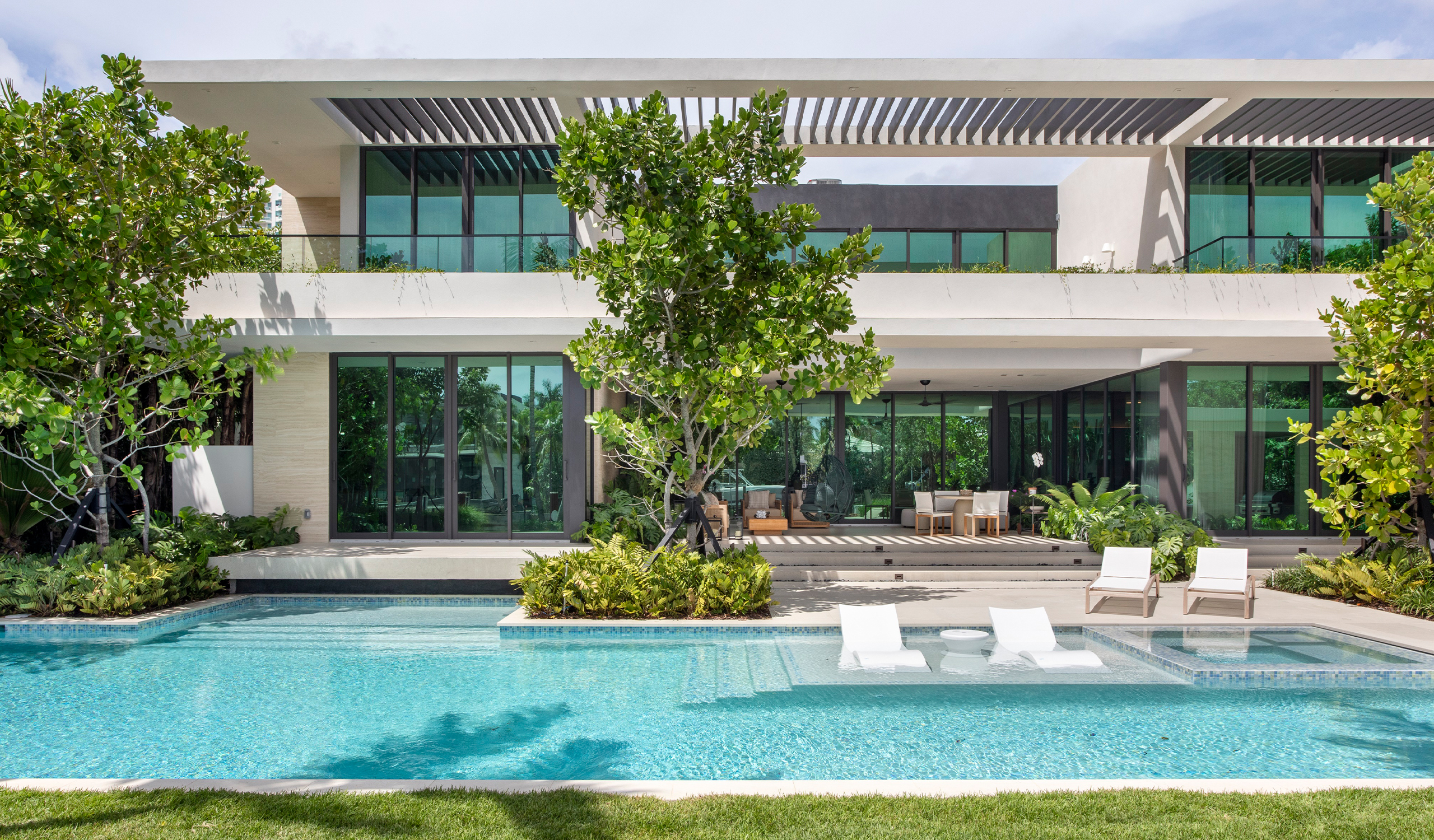
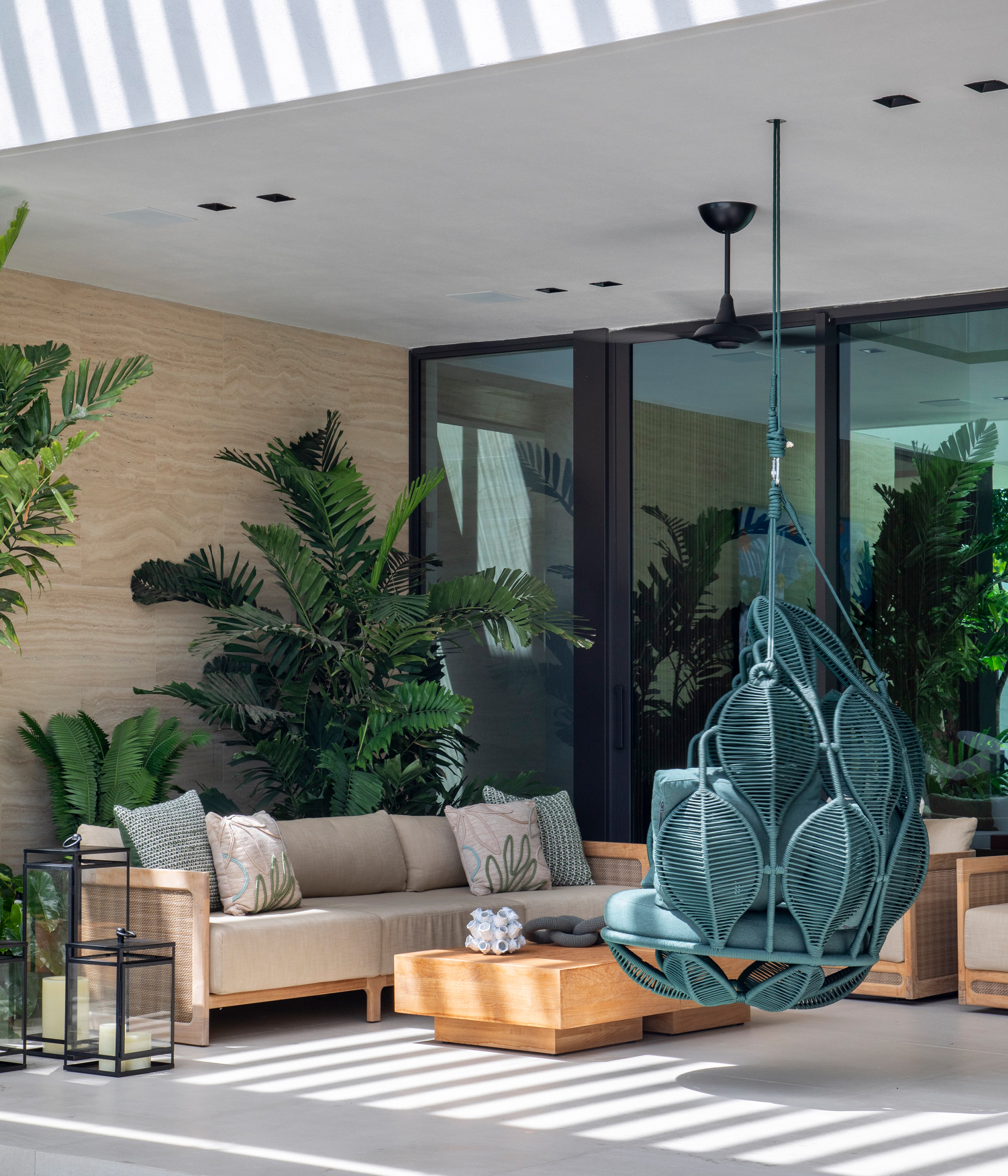
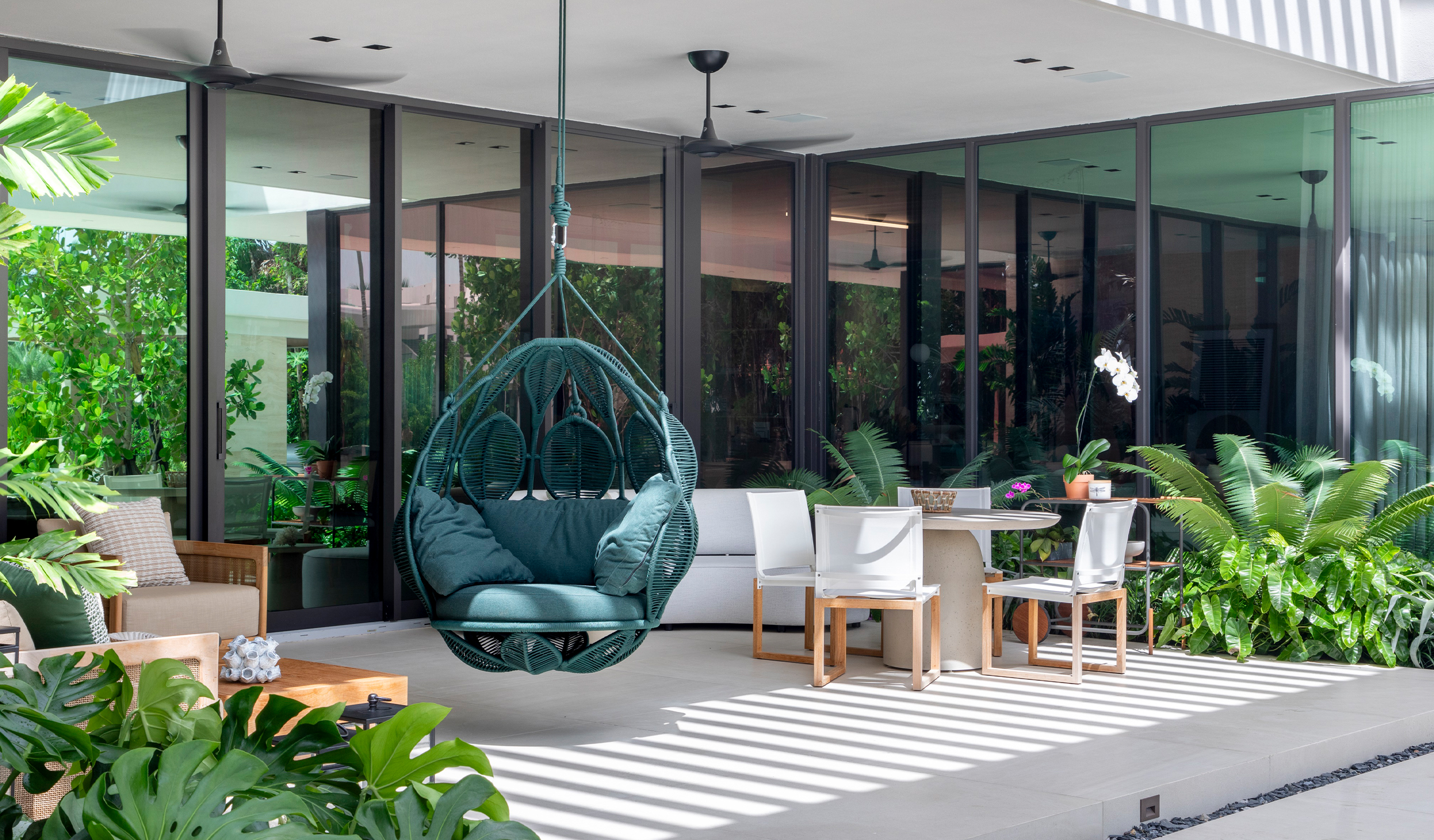
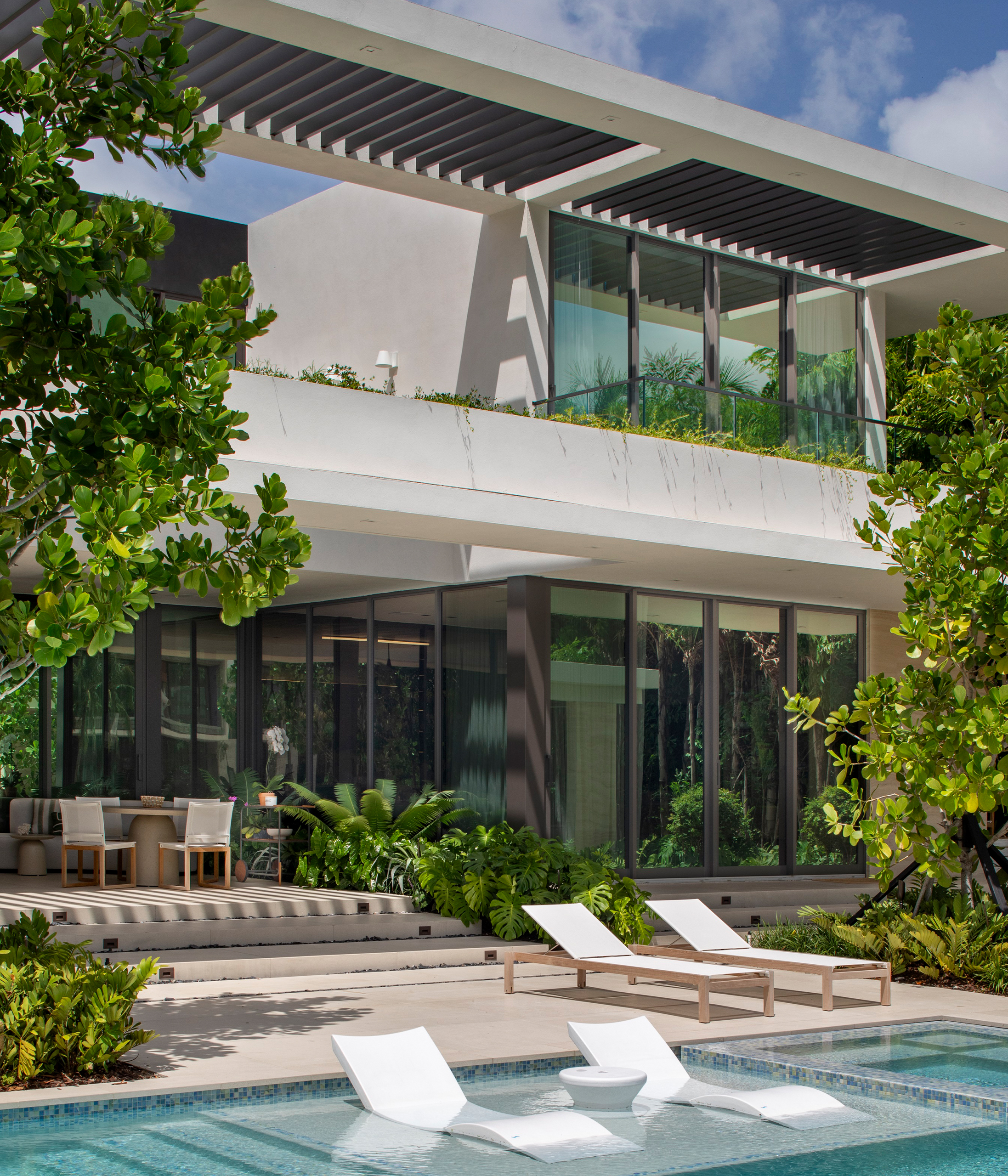
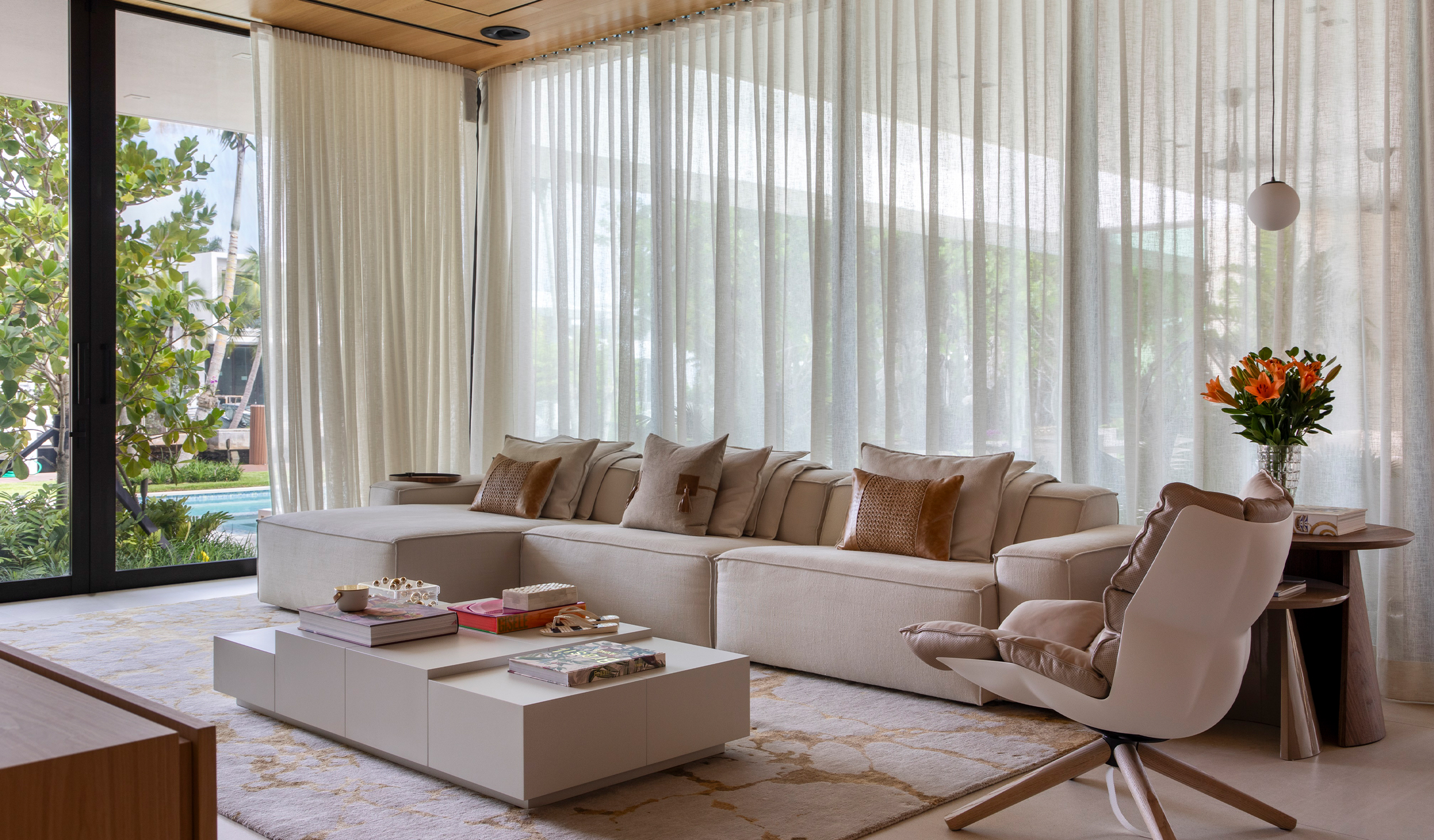
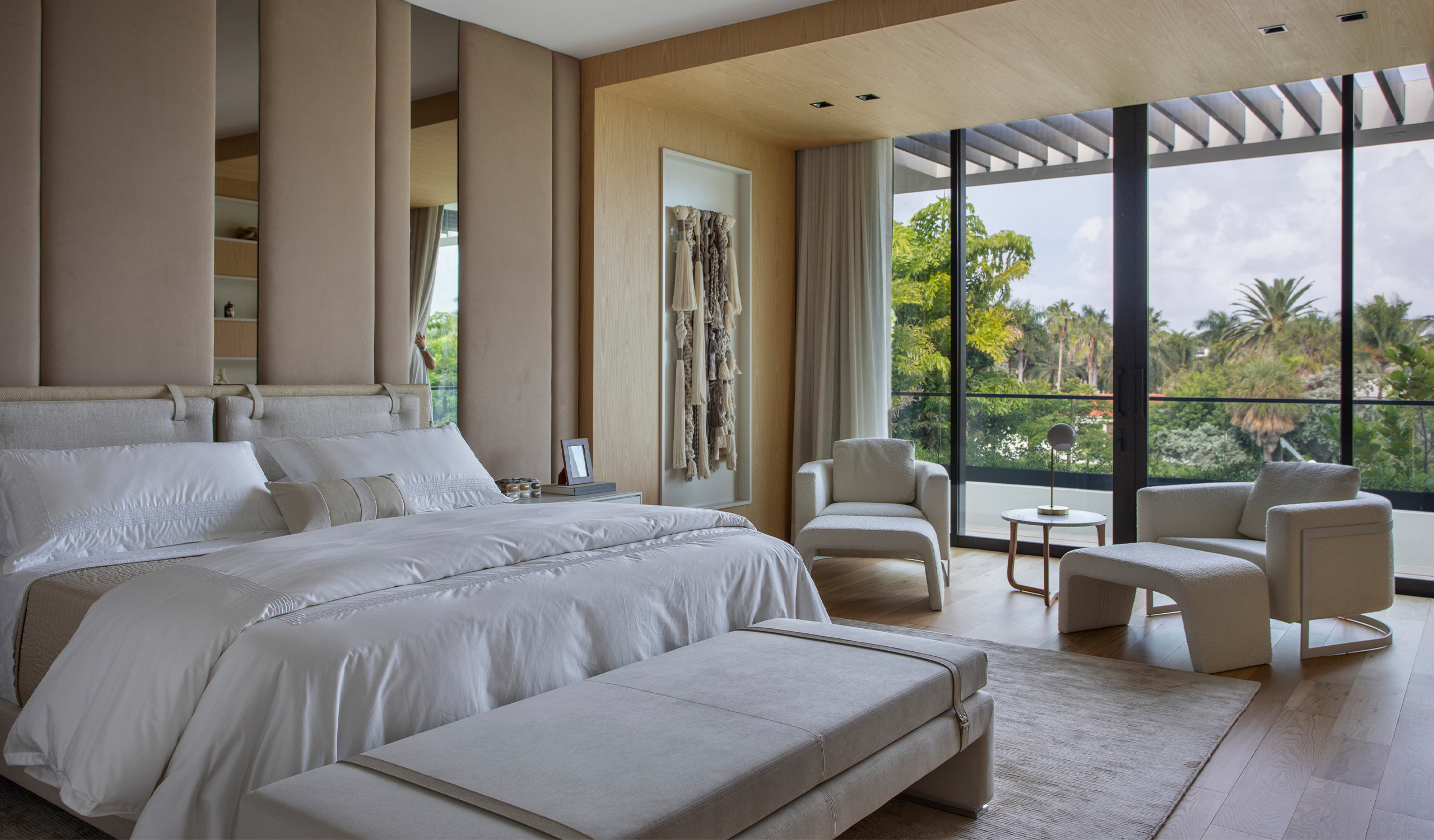
The rear elevation sets that reserve aside. Full-height openings run the width of the ground floor, sliding back to join the living and dining spaces to a broad terrace and the pool beyond. Mirroring the recessed entry, the covered terrace is drawn into the body of the house as a double-height room. A louvered roof overhead throws bands of shadow across the pale floor that shift through the day, while climbing plants grow toward the ceiling. Upstairs, the bedrooms sit back behind terraces, shaded by a slatted pergola at the roofline.
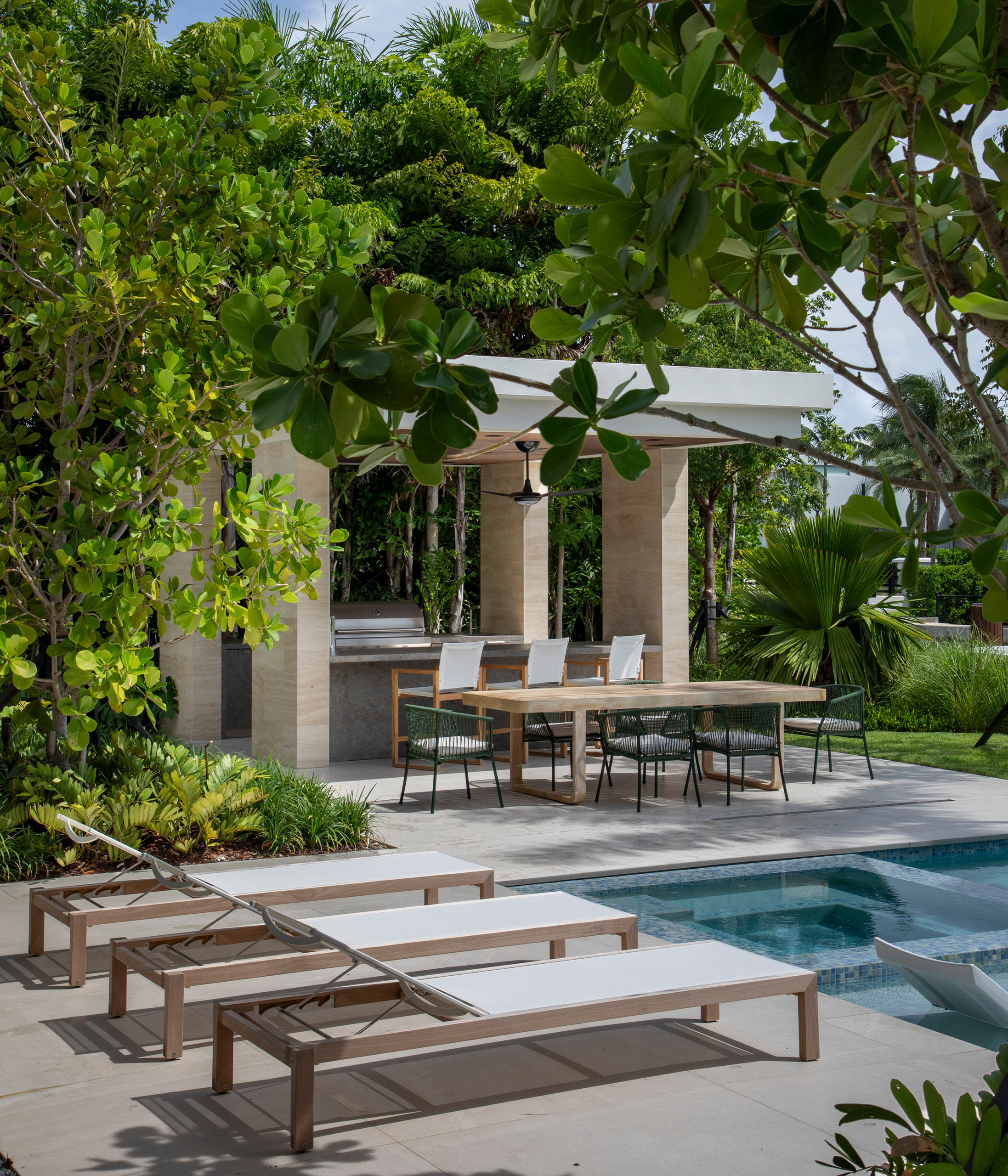
The pool runs the length of the garden, its shallow sun shelf set with in-water loungers and a raised planter holding a mature shade tree at its edge. Beyond it, an outdoor kitchen and bar sit beneath a pergola carried on pale stone piers, wrapped in dense tropical canopy and drawing the life of the house out toward the water.
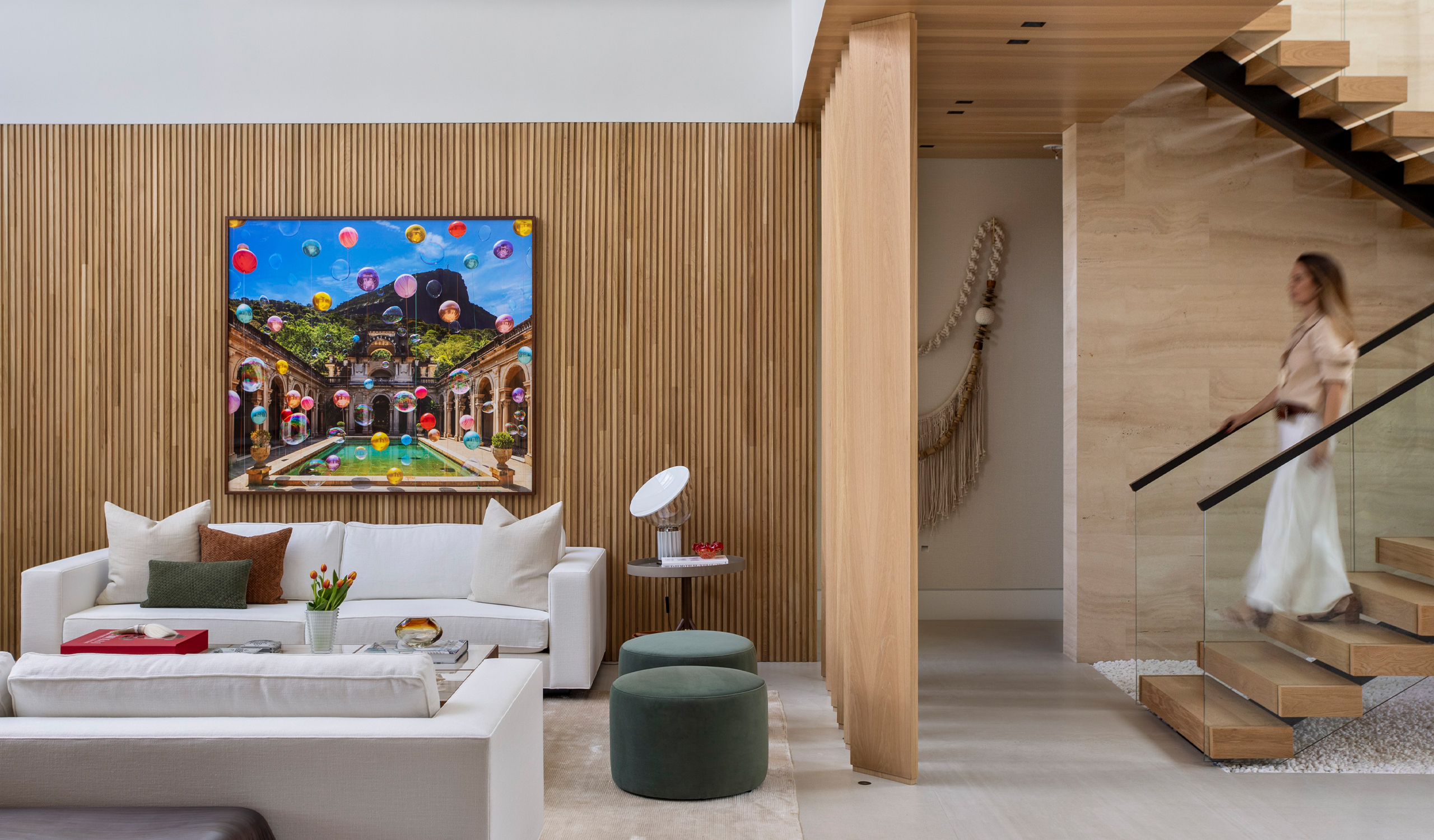
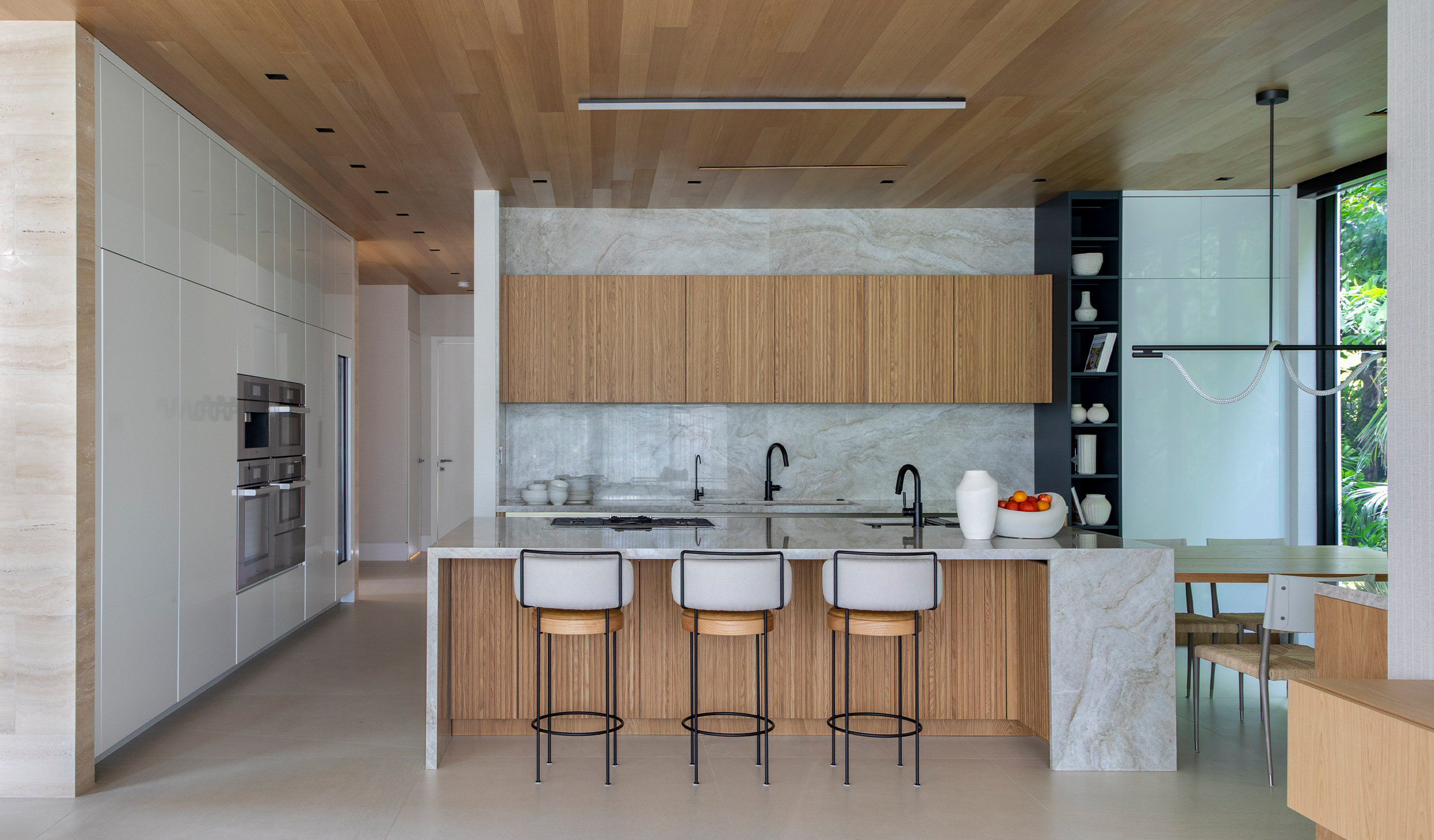
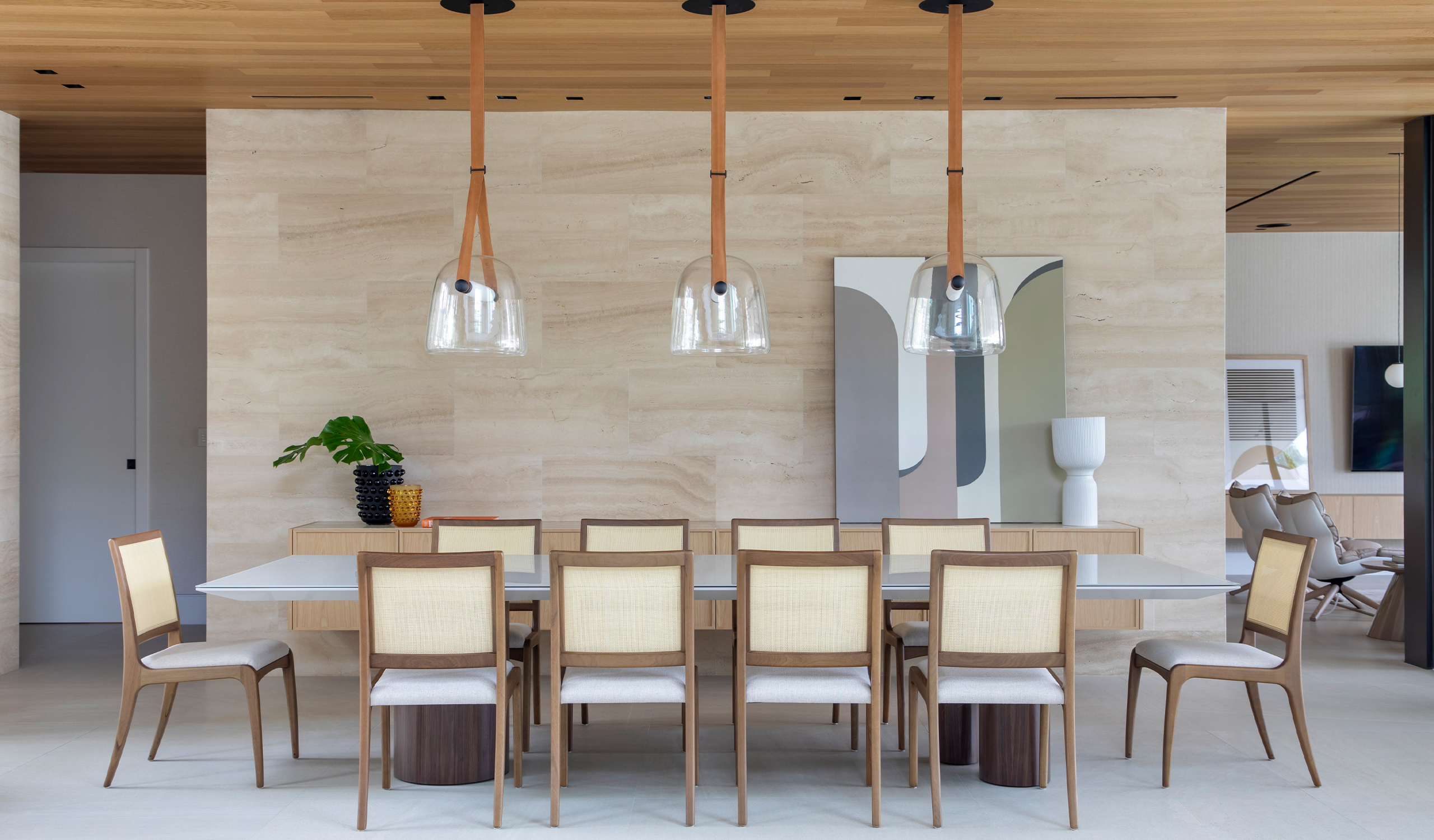
Inside, the same material palette carries through. A cantilevered stair of solid timber treads climbs a wall of pale stone, screened by a row of vertical timber fins, while slatted timber walls and ceilings bring warmth to the rooms washed in filtered light.