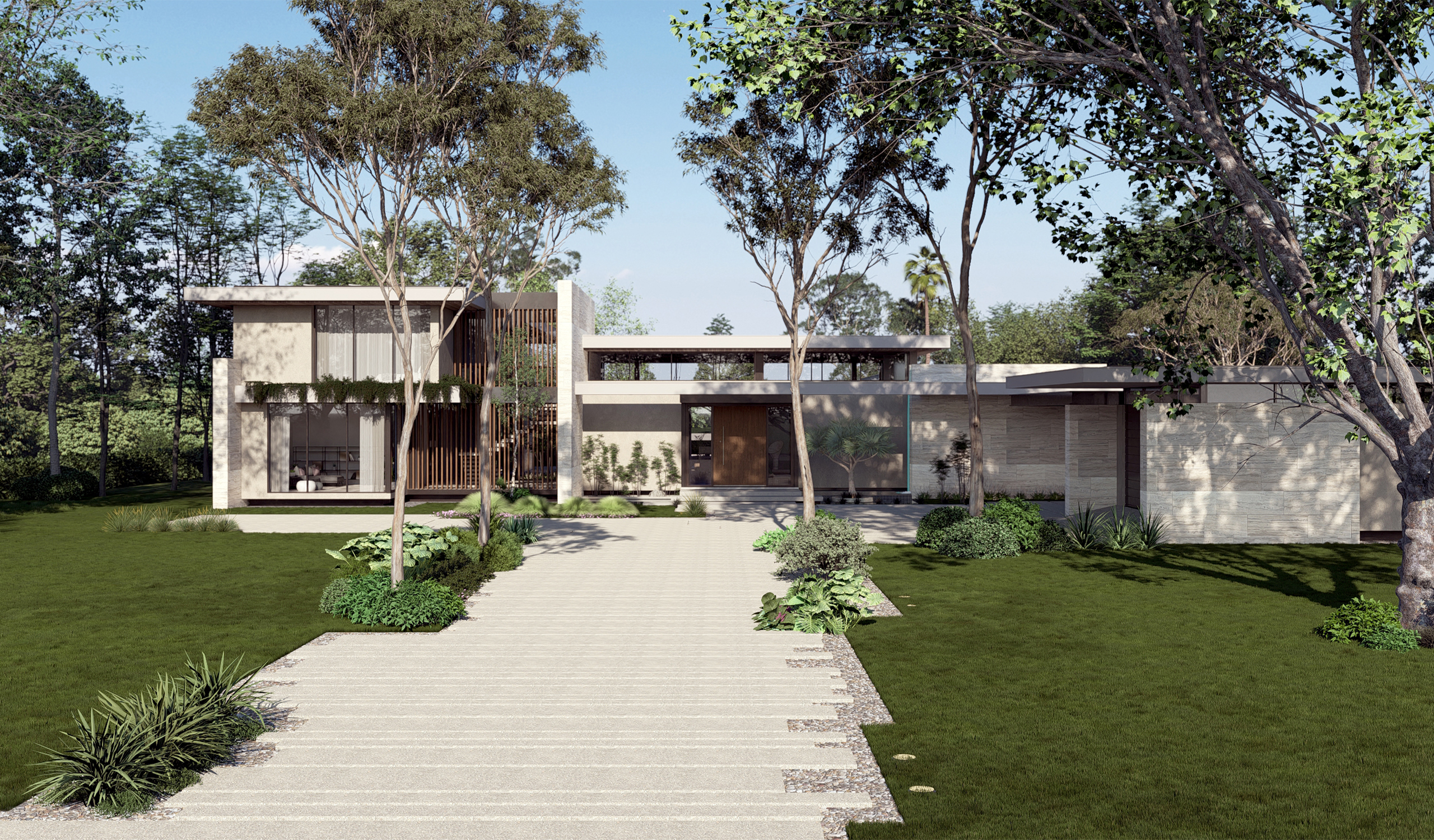
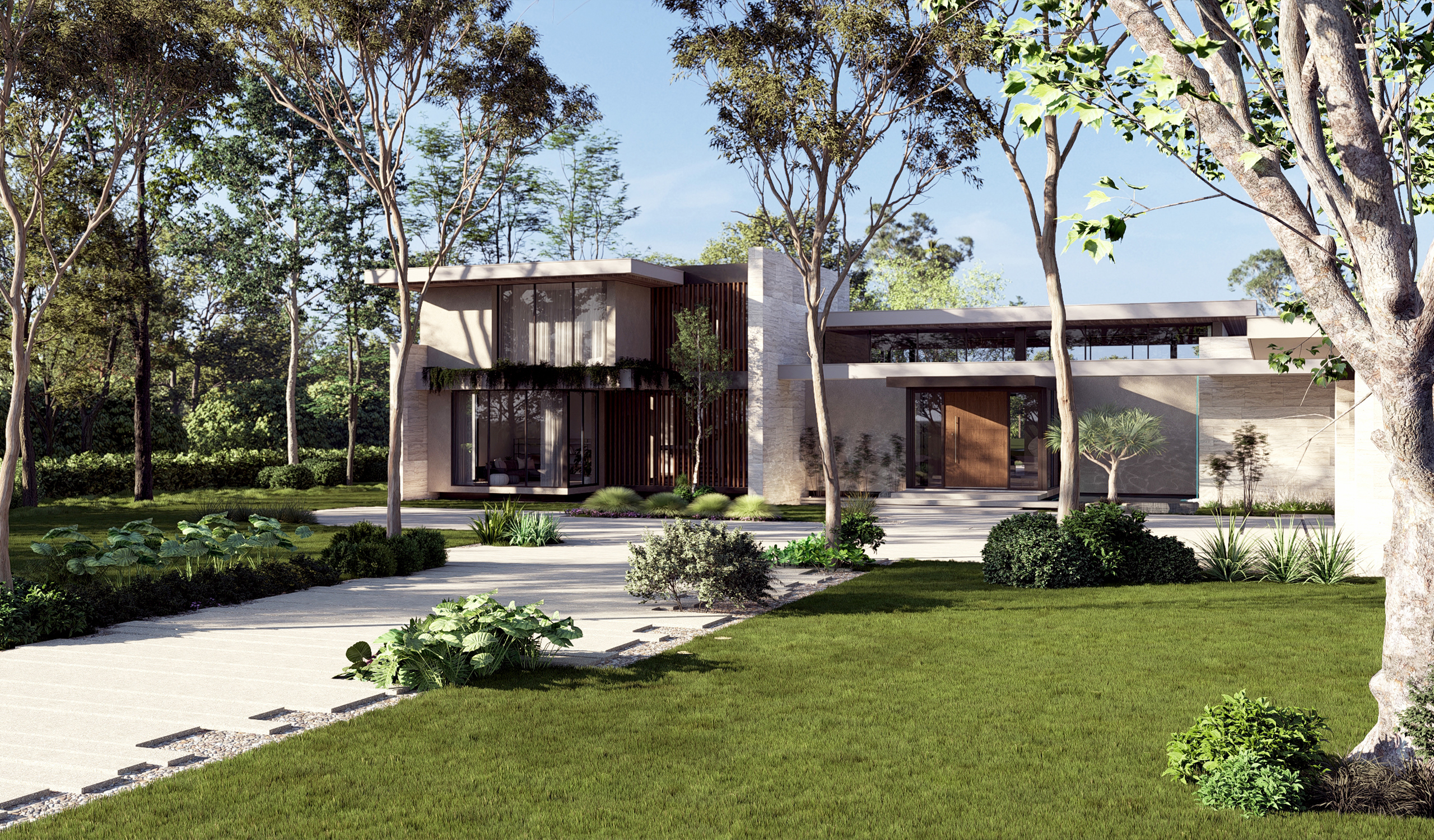
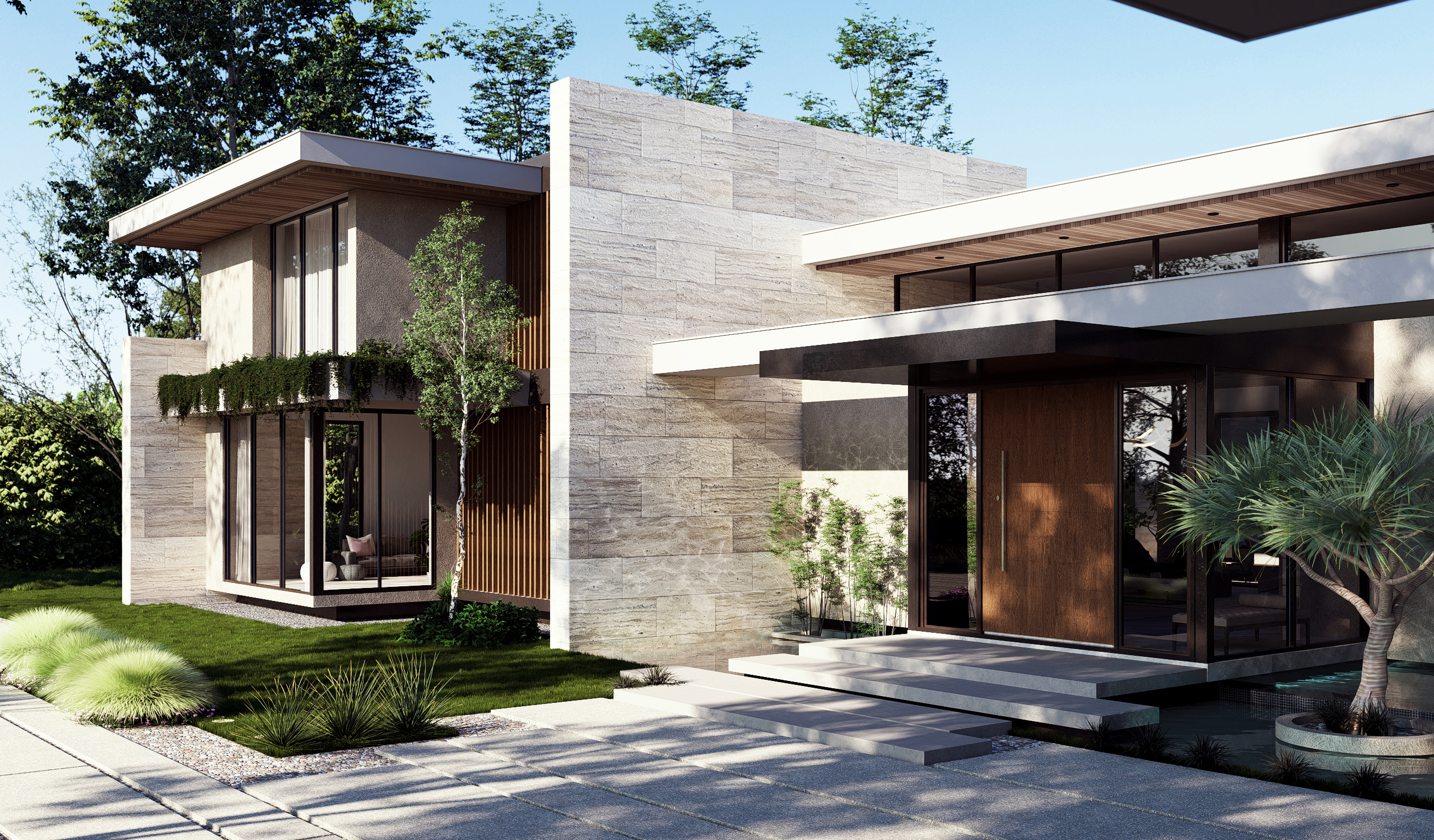
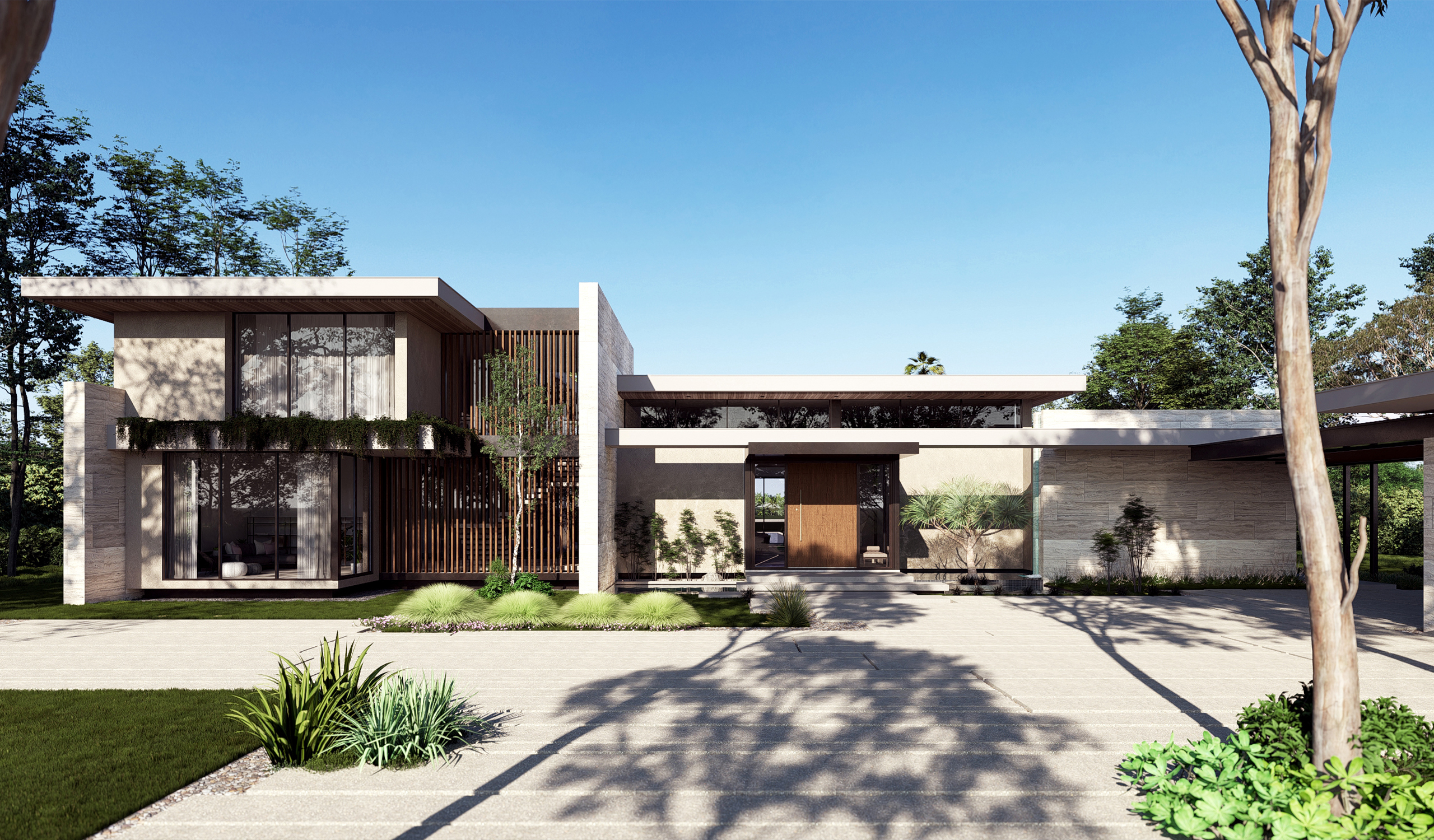
The approach is a broad forecourt of pale stone laid in long bands, running straight across the grass to the front door. To the left, a two-story wing is screened in vertical timber slats, with a planted ledge spilling greenery beneath its upper windows. A tall blade of banded limestone marks the hinge between this wing and the entry volume, where a clerestory tucked under the roof edge draws daylight deep into the plan. To the right, a porte-cochère on slender dark columns carries the same horizontal line out toward the trees.
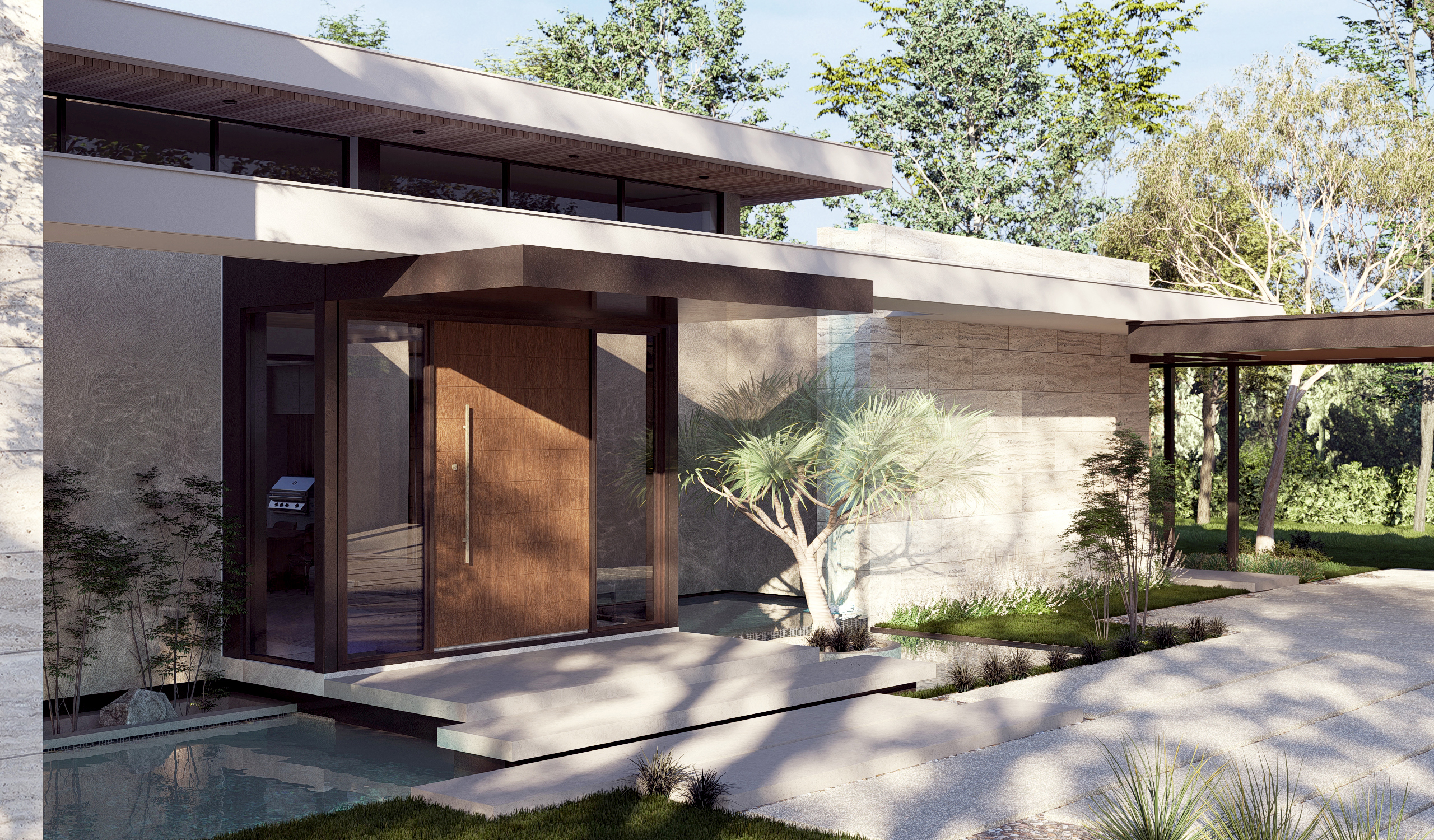
The entrance itself is recessed and quiet. A timber pivot door with a full-height pull sits within dark bronze framing beneath a cantilevered canopy. Arrival is staged over water: stone steps float across a shallow reflecting pool, and a single sculptural tree rises from a planter at its edge. It is a threshold designed to slow the visitor down before the house opens up.
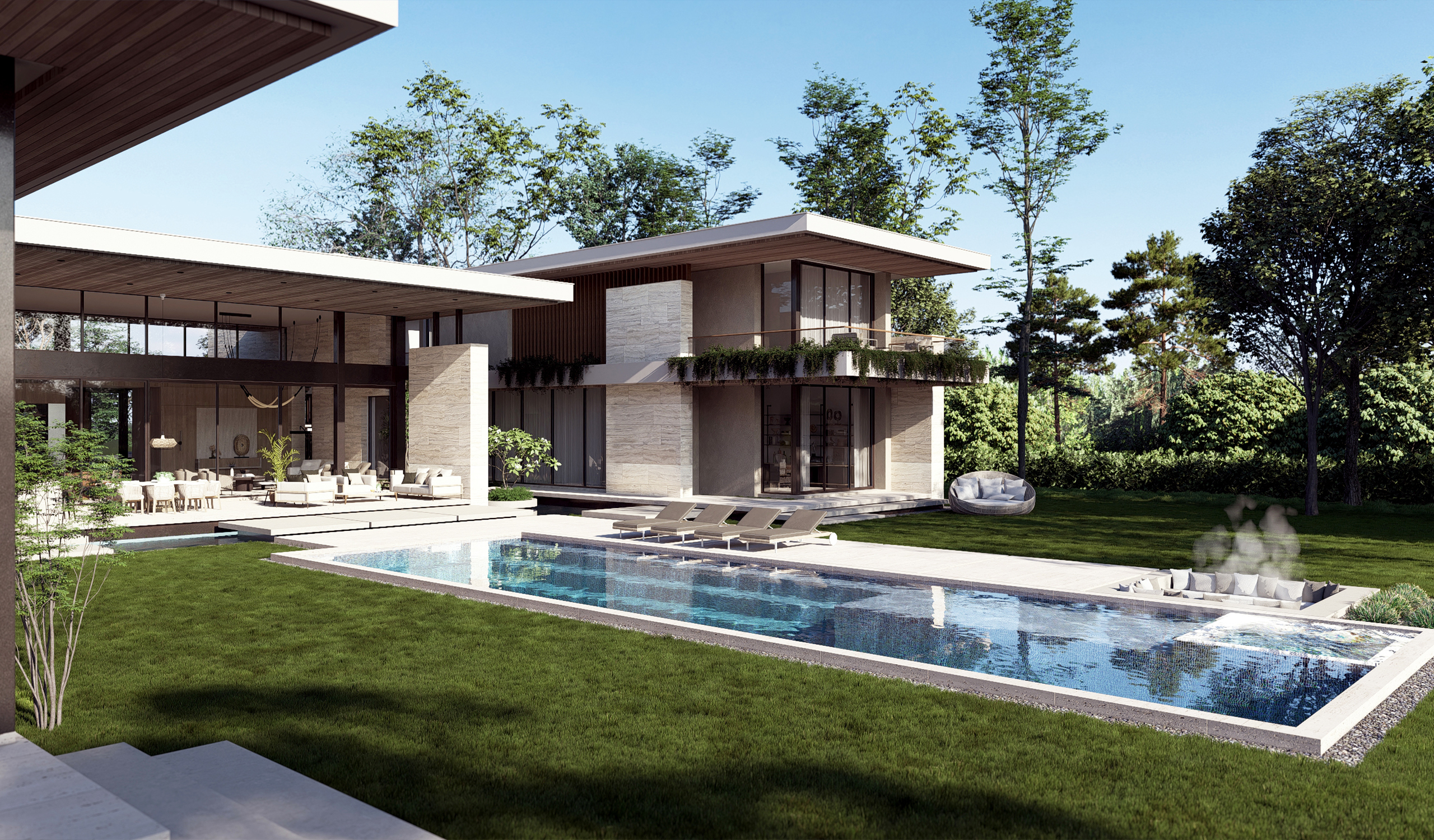
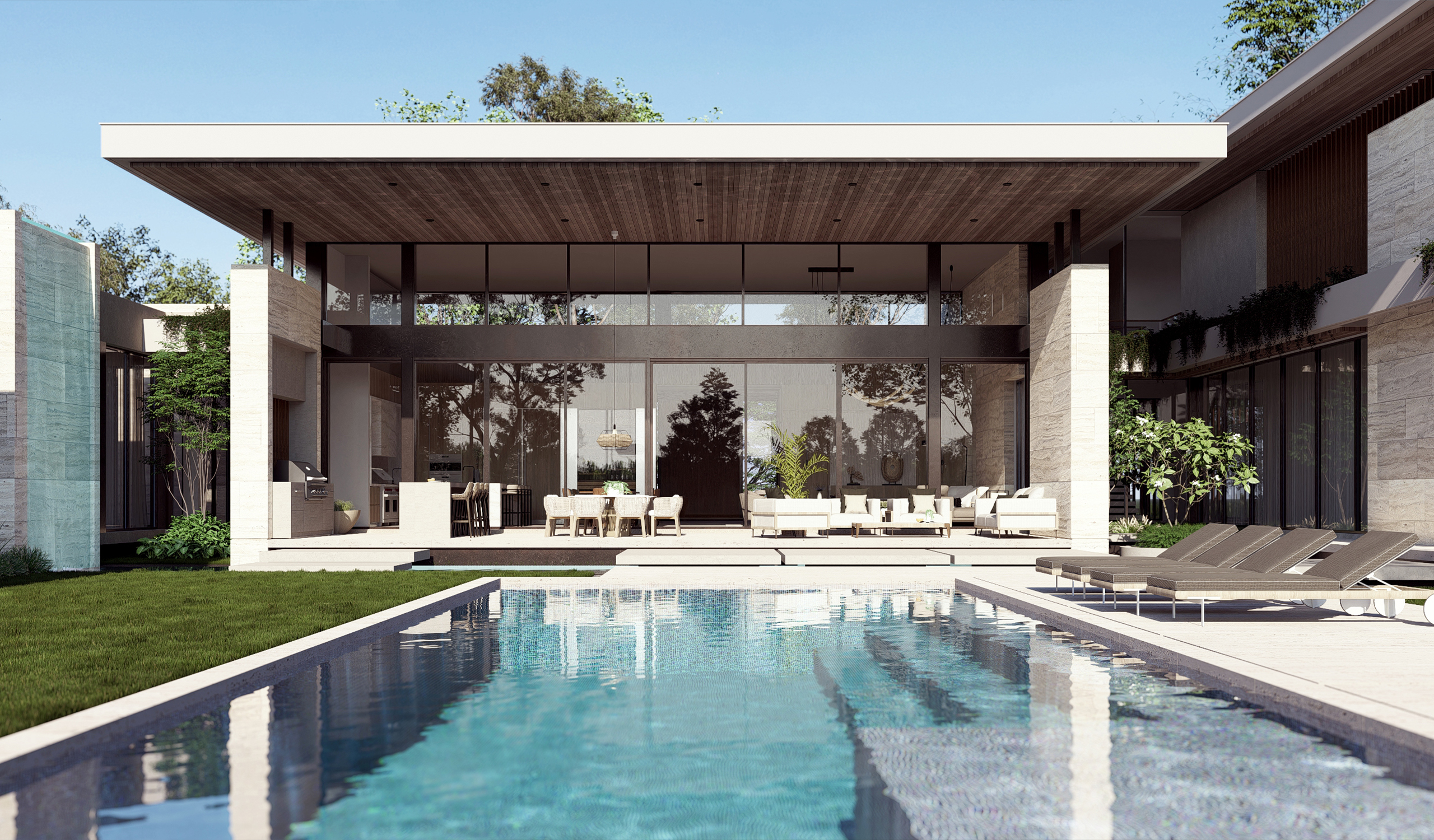
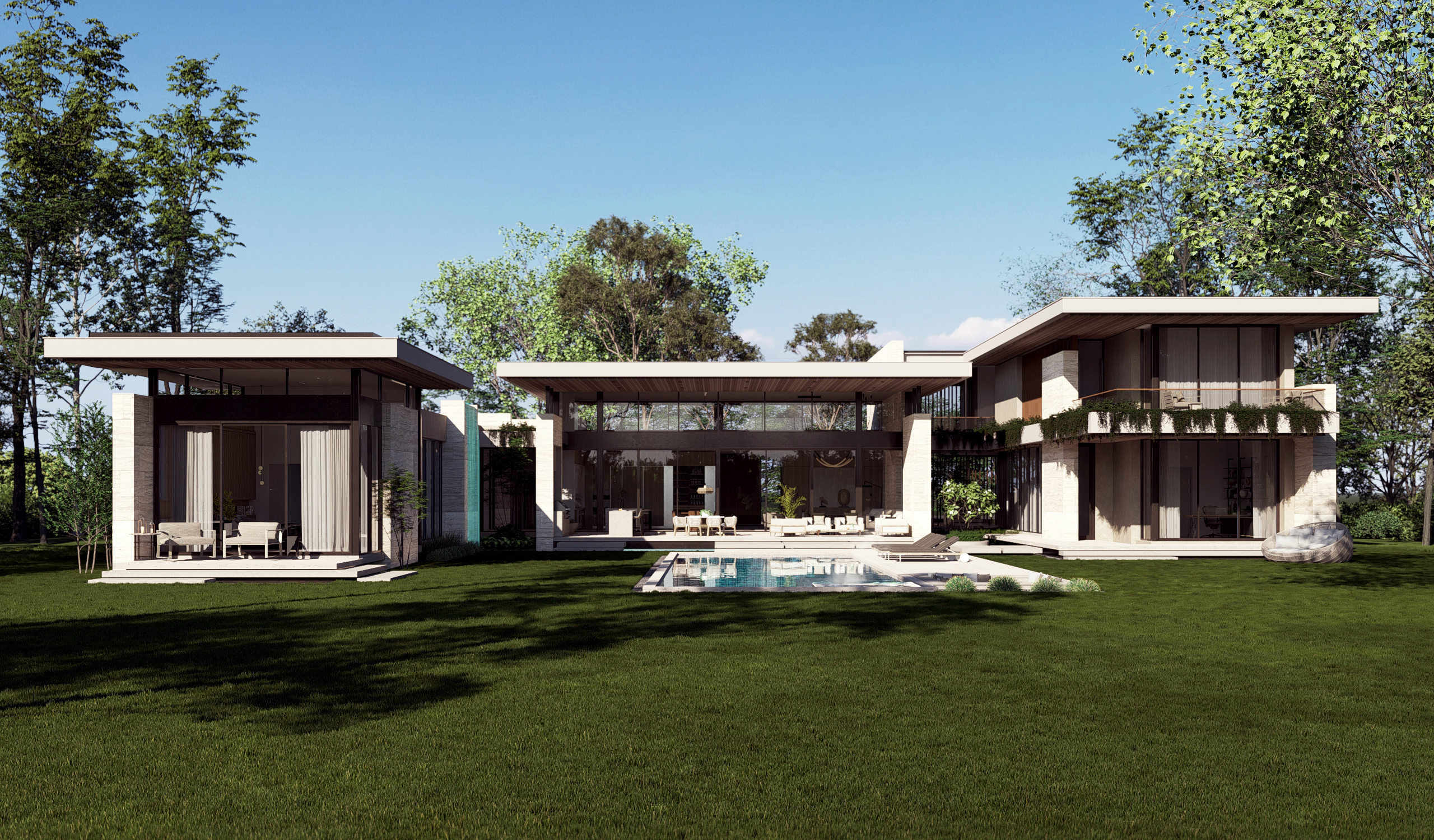
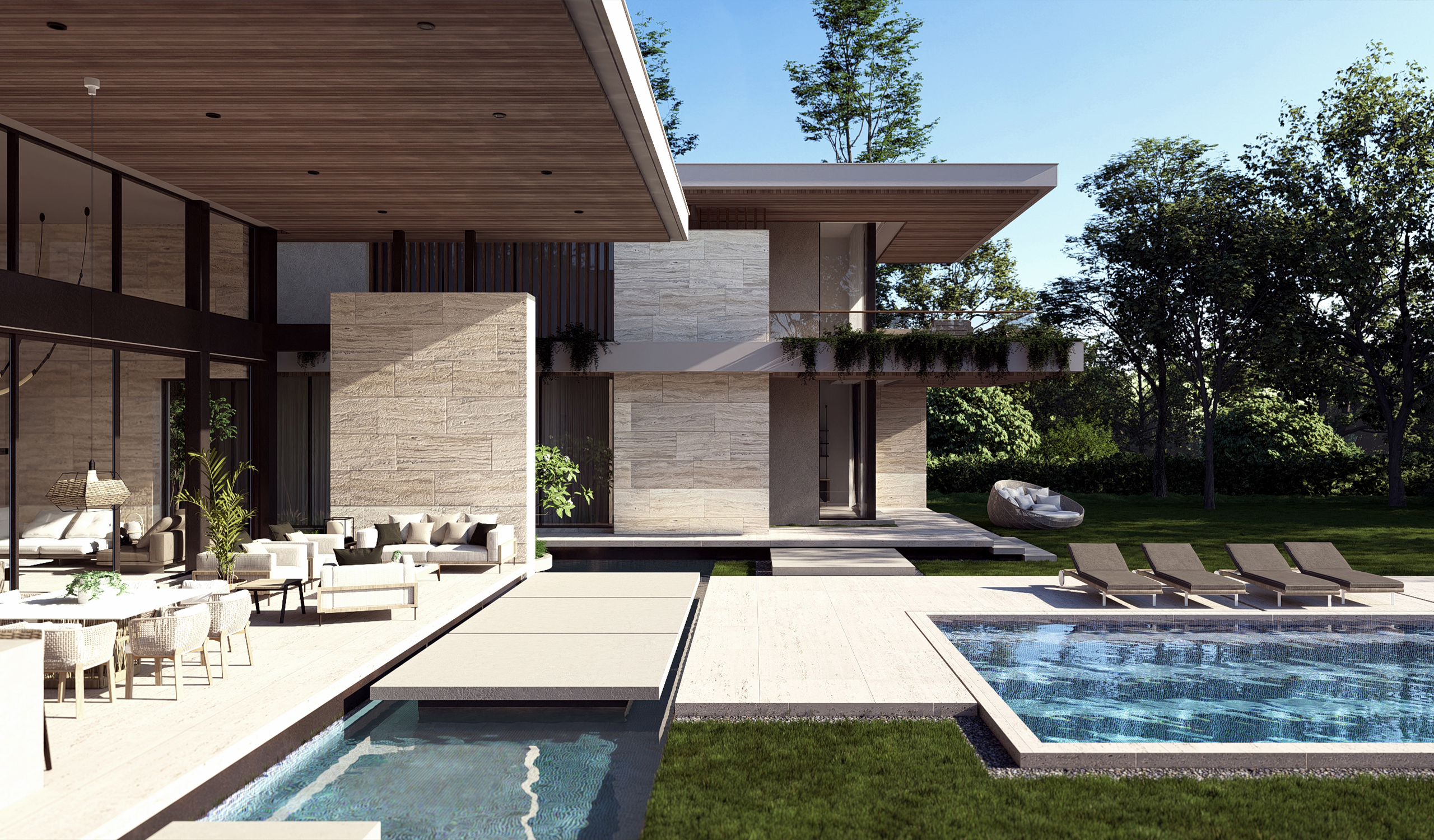
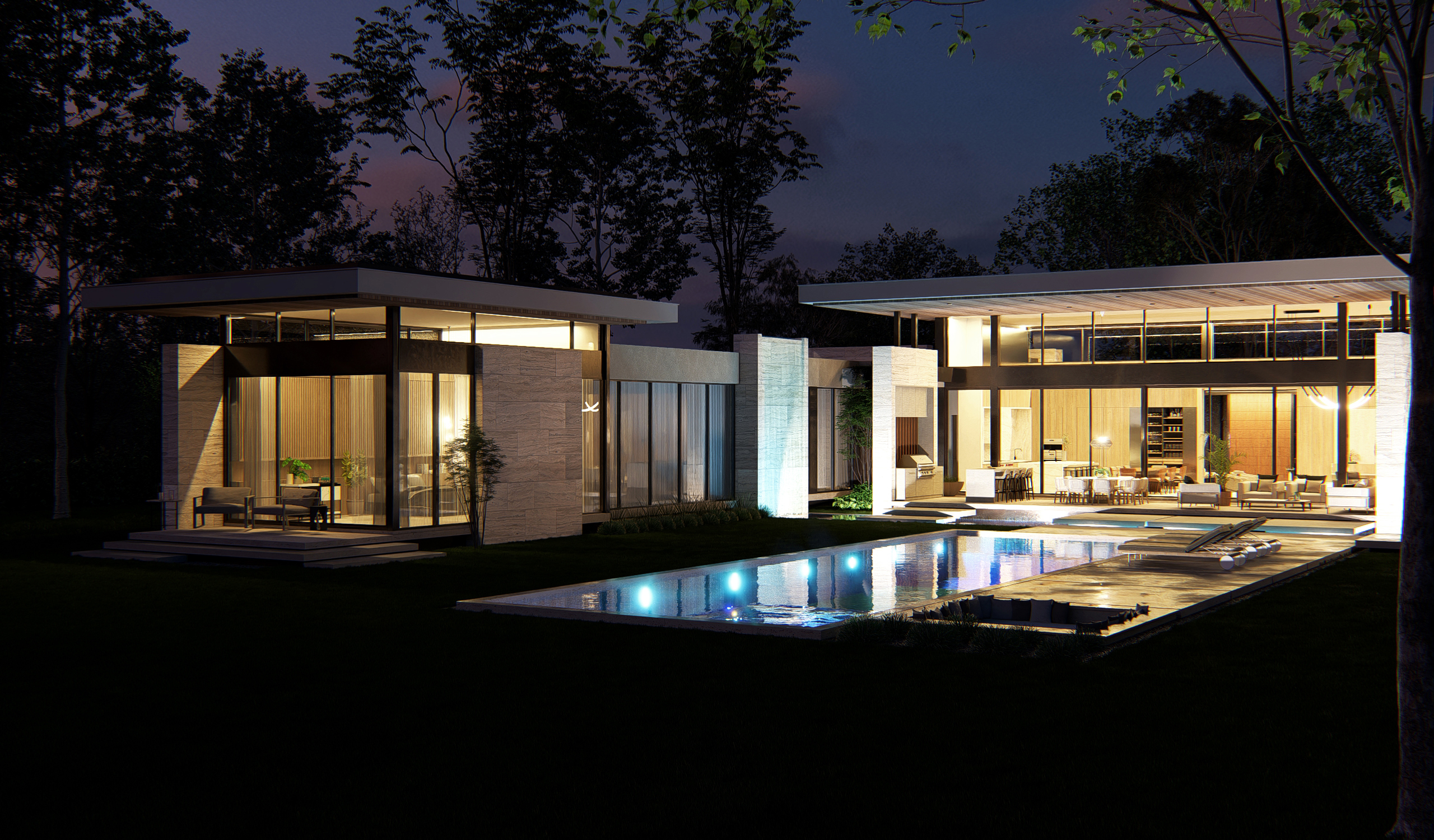
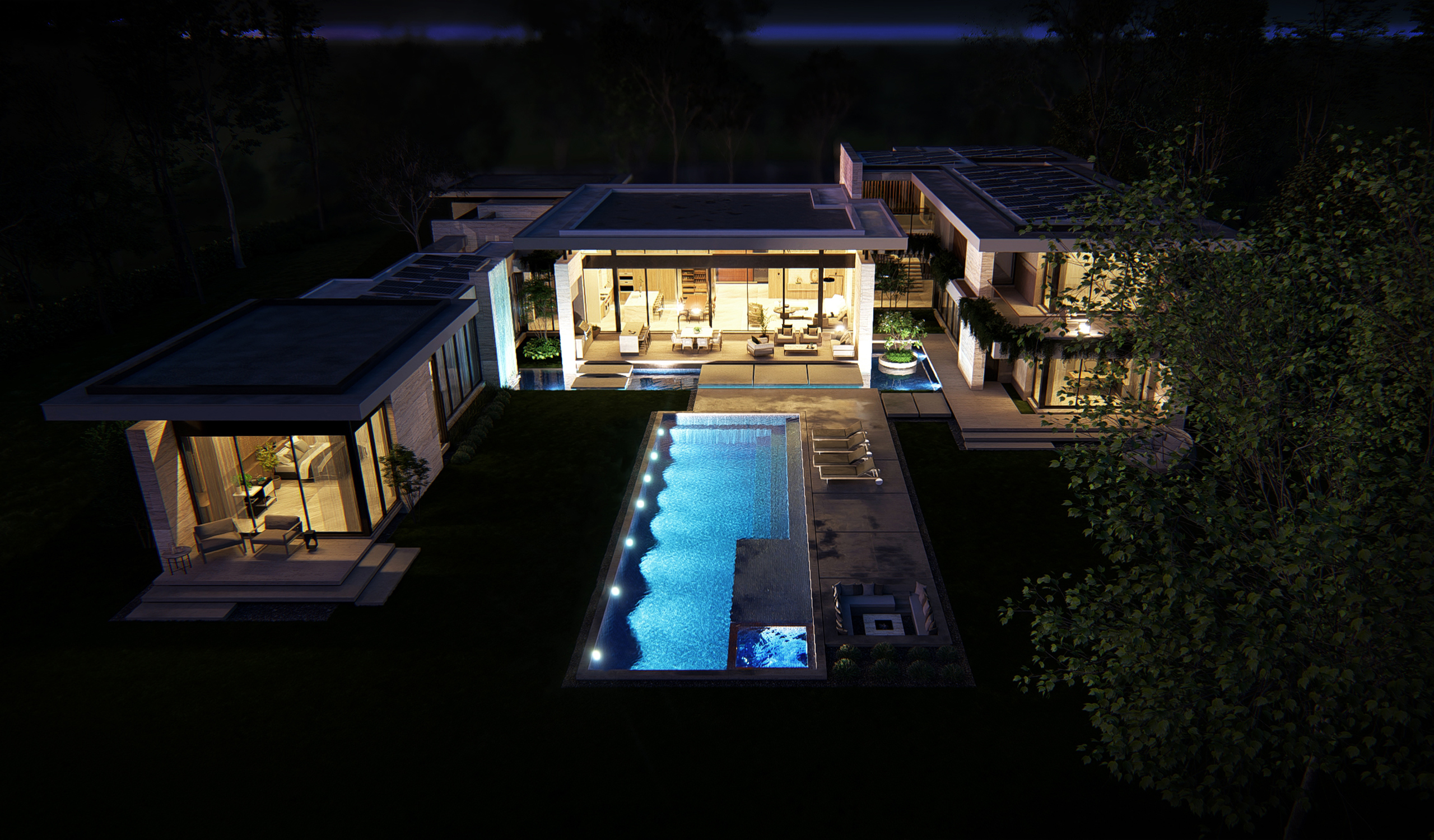
That opening happens at the rear. Three volumes gather around a pool court: a two-story wing with its own planted balcony, a lower pavilion framed in stone at the far end, and the central living pavilion between them. This central pavilion carries the home’s most generous gesture, a deep roof lined in warm timber and held on stone piers and slender columns, sheltering an outdoor living room and kitchen. Its walls slide away entirely, so interior and terrace read as one continuous room facing the landscape. A linear pool extends on axis from here into the lawn, ending in a spa, while a narrow water channel slips beneath a bridge of stone slabs to meet the terrace edge.
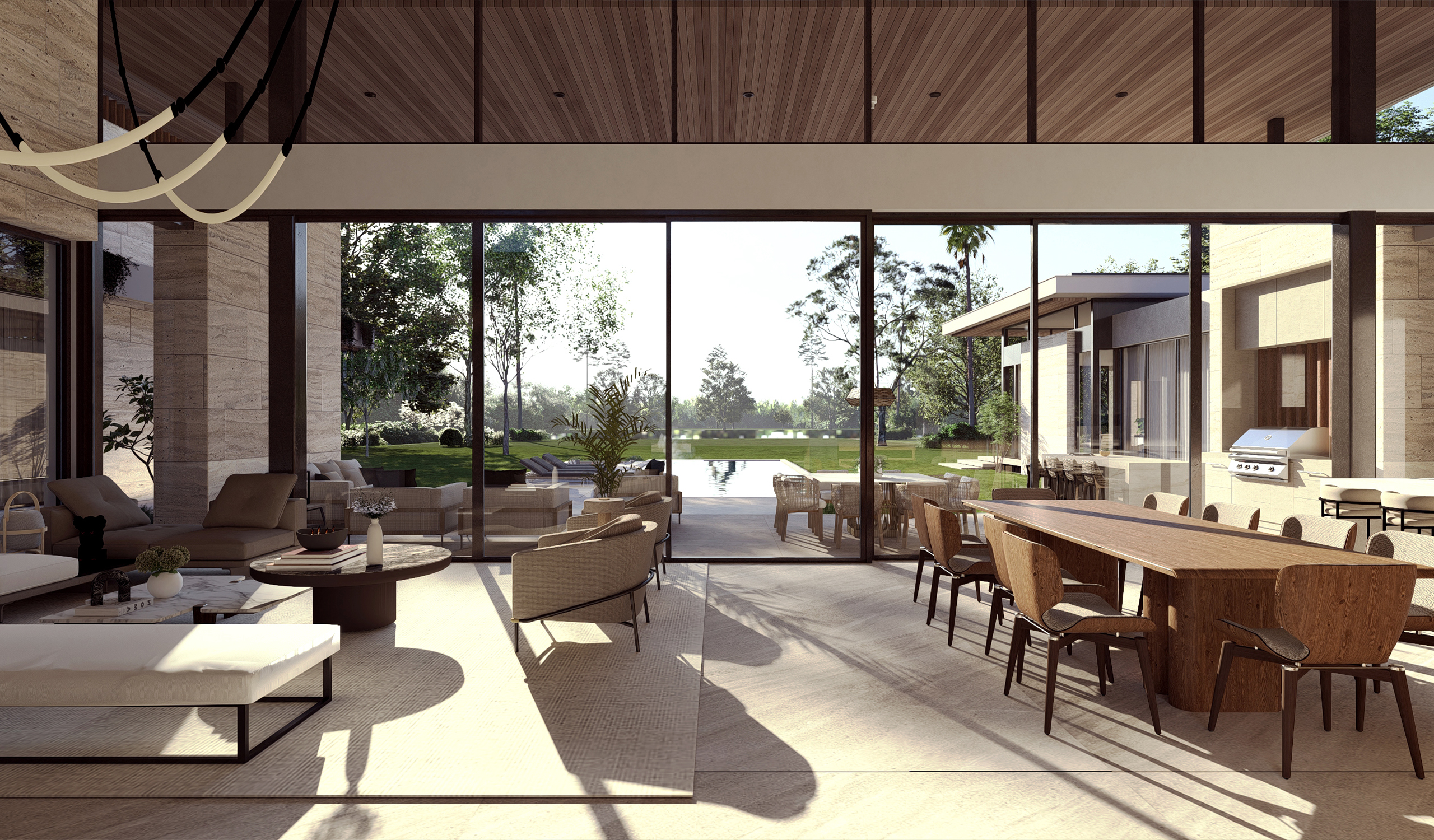
Inside, the timber ceiling continues overhead and pale stone flooring runs out to the terrace at the same level. Stone-clad walls give the long living and dining space its weight, and a sculptural pendant hangs low over the conversation area. After dark, the logic reverses. The pavilions glow like lanterns among the trees, and the pool court becomes the lit center of the house. Stone, timber and water, held in balance.